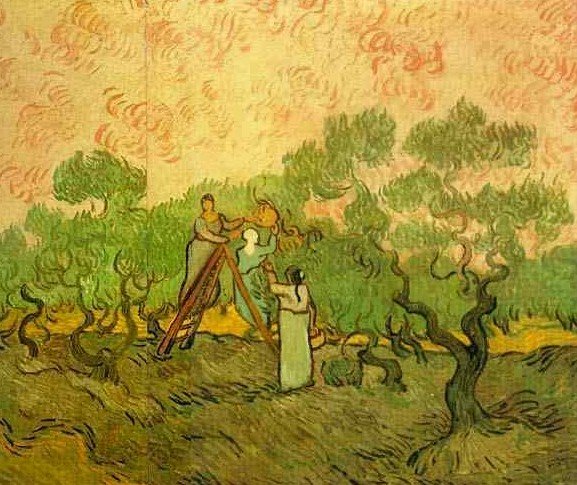
Wednesday, October 18, 2006

Gadianton Mercy

By Keryn of "Ponder It"


During our recent reading of 3 Nephi, a particular part of the pride cycle raised some interesting political and spiritual questions for me. In 3 Nephi chapter 4, the Nephite nation has just overcome and destroyed the Gadianton robbers, at great cost. In 3 Nephi 5:1, we learn
And now behold, there was not a living soul among all the people of the Nephites who did doubt in the least the words of all the holy prophets who had spoken; for they knew that it must needs be that they must be fulfilled.
And then in verse three we learn:
Therefore they did forsake all their sins, and their abominations, and their whoredoms, and did serve God with all diligence day and night.
So it would seem that these people are pretty righteous right now. They take all the robbers prisoner, and, as we learn in verse four:
…they did cast their prisoners into prison, and did cause the word of God to be preached unto them; and as many as would repent of their sins and enter into a covenant that they would murder no more were set at liberty.
I have always been amazed by this manner of dealing with criminals, and a little envious. What would be to live in a world where your word is truly your bond, and conversion to the gospel can create a trustworthy person from a former robber?

I still believe that it would be wonderful if this could be so, and I believe that the Nephites did what they thought was best. But…as we continued reading, we learned that this righteousness and peace are short-lived. Just eight years later:
And thus, in the commencement of the thirtieth year—the people having been delivered up for the space of a long time to be carried about by the temptations of the devil whithersoever he desired to carry them, and to do whatsoever iniquity he desired they should—and thus in the commencement of this, the thirtieth year, they were in a state of awful wickedness. (3 Nephi 6:17)

…but in this same year, yea, the thirtieth year, they did destroy upon the judgment-seat, yea, did murder the chief judge of the land.(3 Nephi 7:1)
Just eight short years later these same righteous Nephites have turned completely back to evilness. And for the first time, I made a possible connection between the quick return to wickedness and the influence of the Gadiantons. Is it possible that some of the robbers released after their conversion returned to their evil ways? Could that be what hastened the downfall of the Nephites at this time? Is it possible that the Nephites were too merciful for their own good? I have no idea if it is even possible to answer these questions, but it has certainly changed the way I think about this part of the story.

Sunday, October 15, 2006

The Organic Restoration


by Christian Y. Cardall of "The Spinozist Mormon"


It seems that, especially through the lens of authorized hindsight, the Restoration ends up conceptualized as a pristine system of doctrine and authority bestowed in almost prefab perfection through Joseph Smith. The immaculate textual recovery of lost “plain and precious things” suggested in 1 Nephi 13, for instance, seems to foster this paradigm. But I think Jacob 5 may be a more realistic touchstone, both in terms of how the Restoration proceeds and what exactly it is that is being restored. It also has implications for what the stance of a believer should be.


Rather than an instant, ‘just add water,’ fully-formed Restoration, Zenos’ allegory of the olive tree paints the more interesting and messy picture of an unfolding organic process in which the bad is only taken away gradually as the grafting-in of the natural branches begins to take effect. Recall, however, that at the time of the lord of the vineyard’s momentous last visit it is not only the main tree that is encumbered with all manner of evil fruit, but also the natural branches severed from the main tree and distantly planted throughout the vineyard in a prior visit.


The interesting thing to notice about this decayed pre-graft state of the natural branches is that, for those inclined to get agitated about such things, it provides a way to increase patience with certain features endemic to the Restoration that some find even worse than the surrounding worldly culture: folk magic, polygamy, patriarchy, the curse of Cain, and so on. The restored gospel is expected eventually to be the only cure for the fallen world’s ills, but because even these natural branches have gone wild before being grafted back into the trunk, they may at first contribute their own varieties of strange fruit before the good stuff begins to grow—perhaps even to the extent that, like the treatment of acne with Accutane, some things seem to get worse before they get better.


Another nice thing about thinking about the Restoration in terms of Jacob 5 is that it shifts focus away from the pursuit of correct but disembodied doctrine as the primary goal to the real prize, represented by the good and precious fruit—which, taking a cue from Lehi and Nephi’s vision of the tree of life, seems to represent a community of individuals with the love of God in their hearts. (’Having the love of God’ may of course be read in at least two ways—feeling love towards God, and exhibiting a love towards one’s fellows akin to what we imagine to be God’s self-sacrificing parental devotion to his children. It seems most fruitful to focus on the latter as a manifestation of the former, since the self-assured possession of the former with inadequate regard for the latter has led historically to much blood and horror on this earth.)


While a modicum of narrative and at least a skeletal doctrinal framework are necessary to the identity, coherence, and motivation of any group, I suspect the success of such a community depends less on getting the fine points of history, doctrine, and metaphysics right than is often supposed. There are all manner of irrelevant idiosyncrasies on display in (especially ancient) scripture, over whose emulation or explanation we obsess; there are also all manner of cosmic questions on which the scriptures are silent, which we itch to answer with our vain speculations. Perhaps such conceptual minutiae are too often mistaken for the substance of the Restoration, deflecting focus from what is really being restored: the ideal of a prophetically-led covenant community of loving individuals. The possibly varying specifics of implementation of such from age to age may simply not be worthy of sustained attention.


While ‘the facts’ may not matter as much as is sometimes supposed, authority may nevertheless matter a great deal, since the community is established and maintained through covenants that rely on authority for their administration. And this is at least partly why I can be sensitive about activist attitudes in the Church: I read our scripture and history as making a central claim that a top-down prophetic structure is essential to the establishment of a worldwide Zion. It is advertised, after all, as a kingdom of God, with the Savior as king and the Saints as subjects. The believing posture towards Mormon prophetic authority that would make sense to me is how Jim F. approaches the canon: asking questions of it not by way of confrontation or challenge, but as an occasion for its authority to speak to him, if it wishes.


To borrow a phrase from liberal Mormon hero Hugh B. Brown, it is God who is the gardener here. One can, I suspect, be a deep thinker with liberal thoughts and suspicions without feeling a need to force and fit and reconcile and be a public and active agent for change. There can be an awareness of one’s place in the top-down structure. To temporarily switch from a familiar horticultural allegory to an equally familiar agricultural parable, there can be a recognition that even if one is right and the authorities are temporarily wrong about something, pulling up the tares vigilante-style can harm a community more than it helps.


Nevertheless, there may be times when the powers that be have the facts so wrong, and the fruits are so bitter, that something must be done. In such circumstances some may be tempted to equate the pruning and digging and dunging spoken of in Jacob 5 with bottom-up grassroots reform. But that these activities are undertaken by the lord of the vineyard and those under his explicit instruction suggests instead that such husbandry is more properly identified with the ministering and course corrections performed by the legitimate authorities. No, when things are too far gone in a top-down organization, the answer suggested by Zenos’ allegory is not reform, but a new restoration, and the casting of the old into the fire. And we also see from the lord of the vineyard’s anguished deliberations that deciding between this, and sparing it a little longer, can be agonizing—for it is grievous indeed to lose a tree that represents a lifetime of investment.


Christian requested that the comments be closed. Please direct any responses to his blog.Thanks.

Wednesday, October 11, 2006

Third Nephi as Type for Second Coming

By Noelie of "Refugees of the War in Heaven"


I have often made my sister Tigersue of Tigersue's Jungle laugh with my prediction of just when the last day will be here. Actually fellow Saints and Believers do not fear. I haven't ever said a day I expect our Lord to return. What I have commented on is all of the predictions that people make with sundry dates for the end of the world that, for some reason, manage to find their way into serious news.


I have usually shrugged my shoulders, make one quick check that the Prophet hasn't said anything and then say, "well I think it is safe to assume that isn't going to be the day."


All facetiousness aside, while we don't know the exact day, I have long felt that we have had the type of His return in our hands since the Prophet Joseph Smith translated the miraculous and beautiful Book of Mormon. How many times have we been told of one of its magnificent purposes is to prepare a people to meet their God and not fully appreciated this aspect of that statement; the return of the Lord Jesus Christ to the Earth? Yes, there are many ways it can prepare a people, up to a final judgment aspect. But, the one I want to focus on is the Last Days and Christ's Return.


I have also had a strange fascination with Hollywood and their twisting of the more evangelical beliefs of the Second Coming. These are of course based on the very image-laden Book of Revelation by John the Beloved. But the images are difficult and sometimes hard to understand. An example of the difficulty is the day that the husband-wife team of Jehovah's Witnesses and I had a conversation at my work.


The husband had a revolving group of wallpapers for his laptop computer that he would bring to play that usually had some very nice music. The theme for these wallpapers was the Book of Revelation. It included traditional definitions for those scenes that John, with his artist brush of words, paints for us. One was a rather gruesome picture of the woman and the beast tearing her apart. As a supervisor, I felt I had to mention that perhaps this one picture might be disturbing to others having to work around him. It was that gory. He turned to me, the heretic Mormon, and said, " Well you have to understand she is a very bad woman." His tone was very condescending. He was proud for the fact that he and his group (there were five of them) all read their scriptures out in the open. Some BYU students might bring their scripture to work for classes to try and get school work done. Most of us find work a distracting place to try and study our scriptures and just don't in general bring them there.


I was a little shocked at his inability to understand the LDS that he had been working around for a very long time. I could no longer resist and said, "You know she is a very bad woman, but the real problem is that you are so caught up in the imagery you are going to fully miss who that woman
really is." He was a little surprised, because in general we had been very quiet during his rather more preachy moments. He was well aware of our majority position in the community of Provo and Orem.


Like Hollywood and our traditional Protestant or Charismatic co-religionists, sometimes it is difficult for Mormons to understand ancient imagery. We want to understand the graphic words of the prophets such as Isaiah and John to help prepare for the Second Coming. what will we see at that time? What will it be like?


I say we are fully in those days now. I can't say when, or exactly what at each time, but I am certain life will look very much as it always has. If we aren't paying attention, we will miss the signs.See, for instance3 Nephi 7.


13 And so speedy was their march that it could not be impeded until they had gone forth out of the reach of the people. And thus ended the thirtieth year; and thus were the affairs of the people of Nephi.

14 And it came to pass in the *thirty and first year that they were divided into tribes, every man according to his family, kindred and friends; nevertheless they had come to an agreement that they would not go to war one with another; but they were not united as to their laws, and their manner of government, for they were established according to the minds of those who were their chiefs and their leaders. But they did establish very strict laws that one tribe should not trespass against another, insomuch that in some degree they had peace in the land; nevertheless, their hearts were turned from the Lord their God, and they did stone the prophets and did cast them out from among them.

15 And it came to pass that Nephi—having been visited by angels and also the voice of the Lord, therefore having seen angels, and being eye-witness, and having had power given unto him that he might know concerning the ministry of Christ, and also being eye-witness to their quick return from righteousness unto their wickedness and abominations;

16 Therefore, being grieved for the hardness of their hearts and the blindness of their minds—went forth among them in that same year, and began to testify, boldly, repentance and remission of sins through faith on the Lord Jesus Christ.

17 And he did minister many things unto them; and all of them cannot be written, and a part of them would not suffice, therefore they are not written in this book. And Nephi did minister with power and with great authority.

18 And it came to pass that they were angry with him, even because he had greater power than they, for it were not possible that they could disbelieve his words, for so great was his faith on the Lord Jesus Christ that angels did minister unto him daily.

19 And in the name of Jesus did he cast out devils and unclean spirits; and even his brother did he raise from the dead, after he had been stoned and suffered death by the people.

20 And the people saw it, and did witness of it, and were angry with him because of his power; and he did also do many more miracles, in the sight of the people, in the name of Jesus.

21 And it came to pass that the thirty and first year did pass away, and there were but few who were converted unto the Lord; but as many as were converted did truly signify unto the people that they had been visited by the power and Spirit of God, which was in Jesus Christ, in whom they believed.

22 And as many as had devils cast out from them, and were healed of their sicknesses and their infirmities, did truly manifest unto the people that they had been wrought upon by the Spirit of God, and had been healed; and they did show forth signs also and did do some miracles among the people.

23 Thus passed away the *thirty and second year also. And Nephi did cry unto the people in the commencement of the thirty and third year; and he did preach unto them repentance and remission of sins.

24 Now I would have you to remember also, that there were none who were brought unto repentance who were not baptized with water.

25 Therefore, there were ordained of Nephi, men unto this ministry, that all such as should come unto them should be baptized with water, and this as a witness and a testimony before God, and unto the people, that they had repented and received a remission of their sins.

26 And there were many in the commencement of this year that were baptized unto repentance; and thus the more part of the year did pass away.


If you look at the preceding chapters of Third Nephi, it was only a great deal more of the same. People kept going on about their business. There were some hard things, some difficult things. Some were hard enough on the people that they repented; several times in what was a very short time frame. Still, life went on each day, even for the believers that were counting the days from the "day and a night and a day" experience.


It is so hard not to give into the thinking of the literal mark of 666, when instead John is attempting to tell us of the corruption of the true power of God as a symbol. It has been so easy for our more artistic friends to further corrupt what is ancient verbal imagery into a scene Satan likes a great deal better; the one where he is born to a woman gaining the body he is still railing that he will never have. It is easy at time for us as Saints to forget that often things happen while the rest of the world looks as it always has. Take for instance birth of Christ or the coming forth of the Book of Mormon. The world was told (given signs of both by prophets) they would happen. Yet, when they did, the miracles were of such everyday wonder much of the world still has never found it! Imagine, even in hindsight, looking at the deeply spiritual is still lacking for most of the world.


It is for this very purpose that we are to feast on the Scripture's words. Only by study, faith and prayers will we actually be able to discern events that will still look like business as usual for most of us. We have a great gift of the prophetic Book of Mormon and rejoicing should be ours.

Sunday, October 08, 2006

Famous Last Words

By Eric N. of "Small and Simple"


I have always liked 2nd Nephi Chapter 2. Mainly this is because it is jammed packed with all kinds of important doctrine. I have long thought it was the greatest chapter in all scripture. I have thought that if I could only have access to one chapter, this would be it. Why do I like it so much? Why does it seem so complete in and of itself? I think it is because of the circumstances under which the spirit was working.

This chapter contains the words of an old and dying father and prophet Lehi, to his faithful and young (but mature) son Jacob. As I consider these circumstances, I can see why something so special came out. What would you tell your faithful child if you knew you were dying, and that this conversation might be the last one you have. This powerful backdrop forms the setting for just such a conversation, which became one of the best chapters in all of scripture. I would like to try to put myself 'in character' of such a father as I provide some comments on this chapter. I invite the reader to do the same thing. Please feel free to share some of your thoughts as you go through the same exercise.

1 And now, Jacob, I speak unto you: Thou art my first-born in the days of my tribulation in the wilderness. And behold, in thy childhood thou hast suffered afflictions and much sorrow, because of the rudeness of thy brethren.

2 Nevertheless, Jacob, my first-born in the wilderness, thou knowest the greatness of God; and he shall consecrate thine afflictions for thy gain.

3 Wherefore, thy soul shall be blessed, and thou shalt dwell safely with thy brother, Nephi; and thy days shall be spent in the service of thy God. Wherefore, I know that thou art redeemed, because of the righteousness of thy Redeemer; for thou hast beheld that in the fulness of time he cometh to bring salvation unto men.

4 And thou hast beheld in thy youth his glory; wherefore, thou art blessed even as they unto whom he shall minister in the flesh; for the Spirit is the same, yesterday, today, and forever. And the way is prepared from the fall of man, and salvation is free.


These first verses are the most personal of the chapter. Lehi acknowledges that Jacob has had a difficult life, partly because of the difficulties of the circumstances of his birth, and partly because of the rudeness of some of his brothers. But immediately Lehi acknowledges that because of the spiritual maturity and knowledge that Jacob has, his very affliction will be a benefit. Lehi praises his young son. He gives what has the feel of a patriachal blessing regarding the redemption of Jacob. How proud Lehi must feel for having such a son, who has beheld the glory of the Lord in his youth! Particularly given the rudeness of some of his other children.

5 And men are instructed sufficiently that they know good from evil. And the law is given unto men. And by the law no flesh is justified; or, by the law men are cut off. Yea, by the temporal law they were cut off; and also, by the spiritual law they perish from that which is good, and become miserable forever.

6 Wherefore, redemption cometh in and through the Holy Messiah; for he is full of grace and truth.

7 Behold, he offereth himself a sacrifice for sin, to answer the ends of the law, unto all those who have a broken heart and a contrite spirit; and unto none else can the ends of the law be answered.

8 Wherefore, how great the importance to make these things known unto the inhabitants of the earth, that they may know that there is no flesh that can dwell in the presence of God, save it be through the merits, and mercy, and grace of the Holy Messiah, who layeth down his life according to the flesh, and taketh it again by the power of the Spirit, that he may bring to pass the resurrection of the dead, being the first that should rise.

9 Wherefore, he is the first fruits unto God, inasmuch as he shall make intercession for all the children of men; and they that believe in him shall be saved.

10 And because of the intercession for all, all men come unto God; wherefore, they stand in the presence of him, to be judged of him according to the truth and holiness which is in him. Wherefore, the ends of the law which the Holy One hath given, unto the inflicting of the punishment which is affixed, which punishment that is affixed is in opposition to that of the happiness which is affixed, to answer the ends of the atonement . . .


These next verses are much more general. Lehi transitions from his prophesies regarding Jacob and his redemption, to teaching him some of the details of the atonement. How important for a father to teach these principles to his children! We gain an understanding about salvation and exaltation from these verses. Lehi goes from saying that salvation is free, to saying that all men will stand in the presence of God to be judged. He goes on to say that the results of this atonement is the inflicting of punishment or happiness, thus answering the ends of the atonement. Lehi appears to want Jacob to know that no flesh can dwell in the presence of God, without the grace of the Holy Messiah. But also that we will be judged on our own merits as well. Lehi goes on -

11 For it must needs be, that there is an opposition in all things. If not so, my first-born in the wilderness, righteousness could not be brought to pass, neither wickedness, neither holiness nor misery, neither good nor bad. Wherefore, all things must needs be a compound in one; wherefore, if it should be one body it must needs remain as dead, having no life neither death, nor corruption nor incorruption, happiness nor misery, neither sense nor insensibility.

12 Wherefore, it must needs have been created for a thing of naught; wherefore there would have been no purpose in the end of its creation. Wherefore, this thing must needs destroy the wisdom of God and his eternal purposes, and also the power, and the mercy, and the justice of God.

13 And if ye shall say there is no law, ye shall also say there is no sin. If ye shall say there is no sin, ye shall also say there is no righteousness. And if there be no righteousness there be no happiness. And if there be no righteousness nor happiness there be no punishment nor misery. And if these things are not there is no God. And if there is no God we are not, neither the earth; for there could have been no creation of things, neither to act nor to be acted upon; wherefore, all things must have vanished away.


Lehi now provides Jacob with the understanding that there must be opposition in all things. He goes so far as to say that if there were not opposition, that there would be no God. In fact no anything. Good and evil simply exist. Even in spite of God. This is a necessary condition. I believe there is something quite powerful here, beyond what I understand. Beyond what I can express. In a way I feel that if you believe in good and evil, then you must also believe there is a God. And if you do not believe in God, then you must ultimately say there is nothing that is good, nor evil. I believe Lehi and Jacob understood this better than I. And the spirit that inspired this knows better than we all.

14 And now, my sons, I speak unto you these things for your profit and learning; for there is a God, and he hath created all things, both the heavens and the earth, and all things that in them are, both things to act and things to be acted upon.

15 And to bring about his eternal purposes in the end of man, after he had created our first parents, and the beasts of the field and the fowls of the air, and in fine, all things which are created, it must needs be that there was an opposition; even the forbidden fruit in opposition to the tree of life; the one being sweet and the other bitter.

16 Wherefore, the Lord God gave unto man that he should act for himself. Wherefore, man could not act for himself save it should be that he was enticed by the one or the other. Lehi now appears to turn his attention to other sons in addition to Jacob. He now introduces the agency of man in the midst of good and evil. Man is free to act, and to be enticed by either good or evil.

17 And I, Lehi, according to the things which I have read, must needs suppose that an angel of God, according to that which is written, had fallen from heaven; wherefore, he became a devil, having sought that which was evil before God.

18 And because he had fallen from heaven, and had become miserable forever, he sought also the misery of all mankind. Wherefore, he said unto Eve, yea, even that old serpent, who is the devil, who is the father of all lies, wherefore he said: Partake of the forbidden fruit, and ye shall not die, but ye shall be as God, knowing good and evil.


Lehi here explains Satan as one who chose evil and in so doing became miserable. He then sought to entice others to choose evil, that they may be miserable like himself.

19 And after Adam and Eve had partaken of the forbidden fruit they were driven out of the garden of Eden, to till the earth.

20 And they have brought forth children; yea, even the family of all the earth.

21 And the days of the children of men were prolonged, according to the will of God, that they might repent while in the flesh; wherefore, their state became a state of probation, and their time was lengthened, according to the commandments which the Lord God gave unto the children of men. For he gave commandment that all men must repent; for he showed unto all men that they were lost, because of the transgression of their parents.

22 And now, behold, if Adam had not transgressed he would not have fallen, but he would have remained in the garden of Eden. And all things which were created must have remained in the same state in which they were after they were created; and they must have remained forever, and had no end.

23 And they would have had no children; wherefore they would have remained in a state of innocence, having no joy, for they knew no misery; doing no good, for they knew no sin.

24 But behold, all things have been done in the wisdom of him who knoweth all things.

25 Adam fell that men might be; and men are, that they might have joy.


The doctrine of the fall is now expressed to the sons of Lehi. Because of the fall, Adam and Eve, and their posterity, were cut off from the presence of God and were lost due to this transgression. This is why all must rely on the merits, mercy and grace of Christ. But this transgression was necessary for the purposes of God to be accomplished. Mankind must be enticed by good and evil in order to have the opportunity of having joy and doing good. This is why we are.


26 And the Messiah cometh in the fulness of time, that he may redeem the children of men from the fall. And because that they are redeemed from the fall they have become free forever, knowing good from evil; to act for themselves and not to be acted upon, save it be by the punishment of the law at the great and last day, according to the commandments which God hath given.

27 Wherefore, men are free according to the flesh; and all things are given them which are expedient unto man. And they are free to choose liberty and eternal life, through the great Mediator of all men, or to choose captivity and death, according to the captivity and power of the devil; for he seeketh that all men might be miserable like unto himself.

28 And now, my sons, I would that ye should look to the great Mediator, and hearken unto his great commandments; and be faithful unto his words, and choose eternal life, according to the will of his Holy Spirit;

29 And not choose eternal death, according to the will of the flesh and the evil which is therein, which giveth the spirit of the devil power to captivate, to bring you down to hell, that he may reign over you in his own kingdom.

30 I have spoken these few words unto you all, my sons, in the last days of my probation; and I have chosen the good part, according to the words of the prophet. And I have none other object save it be the everlasting welfare of your souls. Amen.


Lehi wraps up by expressing that because we are redeemed from the fall we are now free to choose liberty and eternal life or captivity and death.

Lehi has packed an awful lot into a short space. In thirty short verses he has given a solid argument for the existence of God, an explanation of good and evil, the doctrine of salvation and eternal life, the atonement, Satan, the fall, and agency. This might be the most thorough yet efficient sermons in the history of the world. He explained it all to Jacob, and apparently other sons, as some of his last words prior to his death. I am thankful for these words, and the help they give to me in explaining these important things to my sons. I hope they understand them before I die. These are the most important things a father can teach.

Wednesday, October 04, 2006

The Wisdom of Experience

By Tigersue of "Tigersue's Jungle"


I have always believed that it is better to learn from other's mistakes so that I can avoid repeating those errors. I figure I make enough mistakes on my own. If I can stay away from those pit falls that others have lived, maybe I can circumvent some of the sorrow and pain of poor choices and lack of foresight. I cannot say that I am perfect at this goal (that would be an understatement), but I think my life has been easier because of this way of learning.

For years, I have been one of those individuals that would be stuck reading the Book of Alma. Now as a parent, I find the teaching and pleading of Alma and Alma the Younger to touch my soul. I have wondered how much of their experiences influenced not only the mistakes their children made, but how they taught the gospel to those in their ministry.

While he listened to the words of Abinadi, Alma's heart softens, and converts to the Gospel of Jesus Christ. He is only a young man at the time, around 25 years old. He had the integrity to leave and not follow in the wickednessof King Noah even at the threat of his own life. There is no information on his family. Was he married? Did he have children? How did this change affect them? It would seem that to be part of King Noahs priests there must have been some degree of affluence and prosperity. To leave everything, as did Lehi of old must have been very difficult and if he had children, they might have some residual memory of comforts.

Many years later, we meet a son, Alma the Younger. Alma is an old man, according to the dates in the Book of Mormon, he is somewhere between 70-82 years old. Alma the Younger's description in Mosiah 27:8

[Alma] became a very wicked and idolatrous man. He was a man of many words, and did speak much flattery to the people; therefore he led many of the people to do after the manner of his iniquities.


He had the ability to influence the population to the point of drawing many from the church of God and lead many away from the commandments and the laws of the kingdom. He was rebelling against God. Taught the Gospel of Jesus Christ, heknew what was right and wrong and was willfully defying Gods commands.

His Father in sorrow prayed for his son to be brought back to the fold of God. I imagine the tears, the heartache that all his teaching, all his warnings, and perhaps even his testimony of mistakes he may have made as a priest of King Noah weighed heavily on Almas mind. Surely, he would have taught his son these things, and let him know the difference in the heart. Alma the Younger choosesnot to listen to the experiences of his father, but rather had to learn for himself.

Many years later, this cycle is repeated as Alma the Younger, writes his letters to his sons. One in particular has grieved his heart, and I once again wonder at the age of the children involved. Is it possible that at the time of Alma the Younger's rebellion that he could have been married, and had children. Could these children remember the actions of a rebellious father? As I read his letters,I see a man pleading with them to remember what he learned, the hard way, that they will not make the same errors and suffer the torment he suffered. All through Alma, Chapters 36-42, we read statements that declare personal understanding of doctrine.

Alma 36: 20 ...Soul was filled with joy as exceedingly as was my pain!...

Alma 37: 35 ...Learn wisdom in thy Youth...

Alma 38: 9....I have told you this that ye may learn wisdom, that ye may learn of me....

Alma 39:8
...Ye cannot hide your crimes from God...

Alma 39:19 ....Is it not as easy at this time for the Lord to send his Angel....?

Alma 41: 10 ...Wickedness never was happiness....

Alma 42:1 And now, O my son, ye are called of God to preach the word unto this people. And now, my son, go thy way, declare the word with truth and soberness, that thou mayest bring souls unto repentance, that the great plan of mercy may have claim upon them. And may God grant unto you even according to my words. Amen.


There are many other statements throughout these wonderful letters to Alma the Younger's sons that testify of his experiences and the wisdom he gained from them. As a parent,I want my children to learn from my mistakes and the mistakes of others. I want them to be able to grasp the iron rod and have faith in God. I want them to be able to learn that it is possible to repent of mistakes and sins. Yes,I want them to have an easy life. What parent does not? But, they must learn to accept the consequences of their choices and actions so they can also teach their children to learn from their mistakes. I have learned to love Alma and Alma the Younger as I imagine what their life had been like. I have thought about what they learned as they accepted the will of God in directing their path. I hope that I can garner such strength and faith. I hope that as you read the book of Alma that you might see this teaching of his sons can also apply to us today.

Saturday, September 30, 2006

The Law of Witnesses

By Ryan M. of "Blogger of Jared"


It's a familiar refrain; "out of the mouths of two or three witnesses." And who would object? One witness can easily be challenged. Two witnesses (especially independent ones) provide more credibility. And, in my opinion, each additional witness increases credibility exponentially. Knowing and remembering that the Lord uses the law of witnesses as a modus operandi for establishing His word can be especially helpful as we study the scriptures - particularly the Book of Mormon. It seems to me that no other canon is so surrounded by witnesses. They are like sentinels at the gate of truth for "the most correct book on earth." Let's look at a few of these, starting with some that my favorite apostle, Jeffrey R. Holland, gives us in Christ and The New Covenant:

In keeping with this same covenantal principle, it is interesting to note that there were three earlier witnesses—special witnesses—not only of the divine origins of the Book of Mormon but also of Divinity himself. These early witnesses were Nephi, Jacob, and Isaiah, and it is not by coincidence that their testimonies appear so conspicuously at the beginning of this ancient record . . .

. . . What is known is that most of the "greater views" of the gospel found in the teachings of the small plates of Nephi come from the personal declarations of these three great prophetic witnesses of the premortal Jesus Christ—Nephi, Jacob, and Isaiah. These three doctrinal and visionary voices make clear at the very outset of the Book of Mormon why it is "another testament of Jesus Christ."


In declaring the special preparation these three had for receiving and teaching such "greater views" of the gospel, Nephi revealed the most persuasive qualification of all: They had seen the premortal Jesus Christ.

And now I, Nephi, write more of the words of Isaiah, for my soul delighteth in his words. For I will liken his words unto my people, and I will send them forth unto all my children, for he verily saw my Redeemer, even as I have seen him.

And my brother, Jacob, also has seen him . . . ; wherefore, I will send their words forth unto my children to prove unto them that my words are true. Wherefore, by the words of three, God has said, I will establish my word.


Nephi concluded, "My soul [and he could have said the souls of all three] delighteth in proving unto [our] people the truth of the coming of Christ, . . . that save Christ should come all men must perish."

One could argue convincingly that the primary purpose for recording, preserving, and then translating the small plates of Nephi was to bring forth to the dispensation of the fulness of times the testimony of these three witnesses. Their writings constitute a full 135 of the 145 pages from the small plates. By the time one has read Nephi, Jacob, and Isaiah in these first pages, a strong foundation has been laid for what Nephi called "the doctrine of Christ." It is a foundation conforming perfectly to the title page of the Book of Mormon. After reading these three witnesses from the small plates of Nephi, the reader knows two things in bold relief: that Jesus is the Christ, the Son of the Living God, and that God will keep his covenants and promises with the remnants of the house of Israel. Those two themes constitute the two principal purposes of the Book of Mormon, and they are precisely the introductory themes addressed by Nephi, Jacob, and Isaiah.

And in addition to providing a witness of Christ, these three witnesses fall into another pattern set by the Lord time and time again; that of a type and shadow. These three witnesses of Christ and of the divinity of the Book of Mormon have, by virtue of their testimonies, lent weight to Joseph Smith and the procedure he followed of choosing three special witnesses (Martin Harris, Oliver Cowdery and David Whitmer). These three men experienced a combination of physical (touching and turning the plates) and supernatural (angelic visitation) manifestations that could, with validity, put to rest any claim that they were victims of an elaborate hoax. They would railroad detractors into the unenviable position of combating the gravity of fervent eyewitness testimonies. Joseph Smith was not alone.

The Book of Mormon is surrounded by men who boldly stood to say "We have seen these things." These include Jacob, Nephi, Isaiah, Martin, David, Oliver, Joseph and the testimonies of the additional eight witnesses.

Why is this all so important? We know that we can ultimately know the truth of all things by the power of the Holy Ghost right? So why would/does the Lord bother to use such an archaic method to establish His word? Holy Ghost vs. farmers and nomads seems akin to using an abacus to prove an equation instead of using a graphing calculator.

Sadly, it's because all we understand is the abacus. How glorious it would be if all people were so spiritually inclined that when a missionary eventually arrived with the gospel in his hands, the Holy Ghost could immediately "witness" to the truth of the message. Wouldn't it be nice if we, as members, could be converted to each of the lessons that come from General Conference the first time? Instead, we have to hear at least three apostles reinforce the message of the dangers of Internet pornography, et.al. before we start to get the hint!

Until then, we can certainly be grateful for the law of witnesses. We can thank the authors of the Book of Mormon and others for helping us understand the great lengths to which the Lord will go to bring us back to Him. Even if it means breaking out His dusty old abacus and teaching us slide by slide, witness by witness.

Wednesday, September 27, 2006

The Tree of the Atonement

By Connor B. of "Connor's Conundrums"

Tree of Life

The Tree of Life is a symbol familiar to all who have read the Book of Mormon. Nephi learned from an angel that the tree in his father's vision represents the love of God. The vision shows a tree bearing white fruit, with a single path leading up to it, for all to navigate in order to approach the tree.

The Tree of Life in Lehi and Nephi's vision is one of two types presented in the Book of Mormon. This specific version is the communal Tree of Life where all may come and partake. Once Lehi himself had partaken of the fruit, his immediate reaction was to invite his family to do the same.

And as I partook of the fruit thereof it filled my soul with exceedingly great joy; wherefore, I began to be desirous that my family should partake of it also; for I knew that it was desirable above all other fruit.
And it came to pass that I beckoned unto them; and I also did say unto them with a loud voice that they should come unto me, and partake of the fruit, which was desirable above all other fruit. (1 Ne. 8:12,15)


The tree in this instance is a single tree from which everybody may partake of the fruit. Also representative of Christ's atonement, a profound manifestation of God's love, one sees the symbolic association of "coming" to a central location. We are counseled to come unto Christ, where all may partake of the heavenly gift. As all may come unto the communal Tree of Life, so may we all come unto Christ, our only Savior, to partake of his salvation.

The other type of the Tree of Life we see in the Book of Mormon is the individual tree. This version is found in Alma 32, where Alma discusses planting the seed of faith, that it may begin to grow into the tree of life.

And thus, if ye will not nourish the word, looking forward with an eye of faith to the fruit thereof, ye can never pluck of the fruit of the tree of life.
But if ye will nourish the word, yea, nourish the tree as it beginneth to grow, by your faith with great diligence, and with patience, looking forward to the fruit thereof, it shall take root; and behold it shall be a tree springing up unto everlasting life.
Then, my brethren, ye shall reap the rewards of your faith, and your diligence, and patience, and long-suffering, waiting for the tree to bring forth fruit unto you. (Alma 32:40,41,43)


I learn from this comparison how individual and personal the atonement can be. While he suffered the sins of all mankind, he suffered for my sins, and that fact alone endears him to me. While I can tread the path with everybody else, and arrive at a central tree to share the fruit and its joy with those I love, I can also have my own tree, planted deep within me. Resulting from the laborious care of nurturing my seed of faith, I am rewarded with a personal and individual tree to be enjoyed alone. Instead of sharing communal fruit from a central tree, I can plant seeds from my tree in other people, so that they too may one day see the tree of life grow within themselves.

Behold, he sendeth an invitation unto all men, for the arms of mercy are extended towards them, and he saith: Repent, and I will receive you.
Yea, he saith: Come unto me and ye shall partake of the fruit of the tree of life; yea, ye shall eat and drink of the bread and the waters of life freely; (Alma 5:33,34)


God's love (and the manifestation of it through his Son's atonement) is both communalistic and individualistic. We feel it universally, knowing that he is no respecter of persons, and loves all of His children. Yet at the same time we know that he knows us personally; he knows our names, our cares, our worries, and doubts, and He, the Master Gardner, will assist us in nurturing and pruning our own tree.

Sunday, September 24, 2006

Little Known Omni

By Mary of "By Study and Also By Faith"


The Book of Omni in the Book of Mormon is one of the more neglected scriptures we have. We tend to think of it as that short book by five different authors who had very little to say. But did they really not say much?

In the very first verse Omni, the son of Jarom, tells us that he was commanded by his father to write on the plates to preserve their genealogy. This tells us that they understood the importance of family and family history, and it is a reminder to preserve our own genealogy and history. Verse 2 tells us that Omni did much fighting to preserve his people, the Nephites, from falling into the hands of their enemies, the Lamanites. So freedom and liberty were as important to them as they should be to us in our day. Living the gospel requires freedom from oppression and the liberty to worship as we see fit.
The plates are passed to Amaron, Omni's son, and he tells us in verse 5 that the more wicked part of the Nephites were destroyed. Why? In verse 6, Amaron tells us,

"For the Lord would not suffer, after he had led them out of the land of Jerusalem and kept and preserved them from falling into the hands of their enemies, yea, he would not suffer that the words should not be verified, which he spake unto our fathers, saying that: Inasmuch as ye will not keep my commandments ye shall not prosper in the land."

This is the second part of the phrase that has played a prominent role throughout the Book of Mormon--that we prosper in the land only as we keep the commandments of the Lord, a statement that the Lord made to His prophets specifically about the promised lands of the Western Hemisphere, to which He led Lehi.

The record is passed to Chemish, brother of Amaron, and then to Chemish's son, Abinadom, who says that what has been written is sufficient and passes the record to his own son, Amaleki. Though Chemish and Abinadom had little to say, they kept the commandment to write at least a little on the plates to preserve the genealogy. It also shows that they placed importance on safeguarding the records and passing them on for the benefit of future generations.

Amaleki had the most to say and he refers to some important doctrines of the gospel. Verse 12 speaks of the following of the prophet and king, Mosiah, as being the same as following the Lord because it was the Lord who warned Mosiah to lead his people out of the land of Nephi. Verse 13 says,

"And it came to pass that he did according as the Lord had commanded him. And they departed out of the land into the wilderness, as many as would hearken unto the voice of the Lord; and they were led by many preachings and prophesyings. And they were admonished continually by the word of God; and they were led by the power of his arm, through the wilderness until they came down into the land which is called the land of Zarahemla."

In other words, follow the Lord, follow the prophet. Listen to the word of God and trust in His arm rather than the arm of the flesh. Basic teachings of the gospel as reiterated by Amaleki.

Amaleki then tells us briefly that Mosiah discovered the people of Zarahemla, who had come out of Jerusalem at the time that Zedekiah, king of Judah, was carried away captive into Babylon. Amaleki also mentions the Jaredites, though not by that name.

In verse 25, Amaleki pleads with "all men" to come unto God:

"And it came to pass that I began to be old; and, having no seed, and knowing king Benjamin to be a just man before the Lord, wherefore, I shall deliver up these plates unto him, exhorting all men to come unto God, the Holy One of Israel, and believe in prophesying, and in revelations, and in the ministering of angels, and in the gift of speaking with tongues, and in the gift of interpreting languages, and in all things which are good; for there is nothing which is good safe it comes from the Lord; and that which is evil cometh from the devil."
In verse 26, he pleads that all will come unto Christ:
"And now, my beloved brethren, I would that ye should come unto Christ, who is the Holy One of Israel, and partake of his salvation, and the power of his redemption. Yea, come unto him, and offer your whole souls as an offering unto him, and continue in fasting and praying, and endure to the end; and as the Lord liveth ye will be saved."

In those two verses, Amaleki reminds us of some of the most important doctrines of the gospel and of their supreme importance in a very meaningful summary. Verse 25 reminds me of the 13th Article of Faith:
"We believe in being honest, true, chaste, benevolent, virtuous, and in doing good to all men; indeed, we may say that we follow the admonition of Paul--We believe all things, we hope all things, we have endured many things, and hope to be able to endure all things. If there is anything virtuous, lovely, or of good report or praiseworthy, we seek after these things."

Main Messages in Omni:

  1. Come unto God/Christ
  2. Duty to God, family, and community (i.e., in keeping the records, fighting for freedom, etc.)

Some of the gospel doctrines referred to in Omni, either implicitly or explicitly:

  1. Family, genealogy
  2. Commandments to preserve and pass on spiritual writings (teaching the gospel), as well as genealogy
  3. Keeping God's commandments leads to prosperity, while not keeping them leads to the Lord's judgments
  4. Follow the prophet, who speaks for the Lord
  5. Prophesying and revelation
  6. Ministering of angels
  7. Gifts of the Spirit (i.e., speaking with tongues and interpreting languages)
  8. Good comes from the Lord and evil comes from the devil
  9. Salvation and redemption
  10. Offering our souls to Christ (i.e., doing His will rather than our own)
  11. Fasting and prayer
  12. Enduring to the end

Wednesday, September 20, 2006

How Nephi Uses Isaiah

By Jettboy


Many people who read the Book of Mormon have a hard time getting past two parts of the book. One of them is the war chapters of the Book of Alma. The second is the Isaiah quotes of Nephi that some people simply skim or skip. Those who don't pay attention to the Isaiah chapters are missing a very important message that Nephi wants to illustrate through his favorite prophet. He wants us to understand the destiny of Israel, the hope of the Gentiles, and the mission of the Savior.

Nephi continually praises Isaiah as the greatest prophet after Moses. His teachings are essential for comprehending the world's spiritual destiny. Behind the hard to understand language is eternal hope for humanity.
2 Nephi 11:8

8 And now I write some of the words of Isaiah, that whoso of my people shall see these words may lift up their hearts and rejoice for all men. Now these are the words, and ye may liken them unto you and unto all men


He first quotes chapters of Isaiah after explaining that the God of Israel will come down to be mocked, smitten, and crucified by the wicked. In return the World will do the same with the house of Israel that the wicked did to God. Eventually, however, God will remember Israel even on the isles of the sea. The World will witness the Salvation of the Lord and be blessed. Isaiah chapter 48 is used to demonstrate the wickedness of Israel. They go against the very God they are supposed to worship. Yet, God will continue to have mercy.
1 Nephi 20:8-11

8 Yea, and thou heardest not; yea, thou knewest not; yea, from that time thine ear was not opened; for I knew that thou wouldst deal very treacherously, and wast called a transgressor from the womb.

9 Nevertheless, for my name’s sake will I defer mine anger, and for my praise will I refrain from thee, that I cut thee not off.

10 For, behold, I have refined thee, I have chosen thee in the furnace of affliction.

11 For mine own sake, yea, for mine own sake will I do this, for I will not suffer my name to be polluted, and I will not give my glory unto another


The next chapter, Isaiah 49, explains though Israel will suffer, ultimately it will be for the greater good.
1 Nephi 21:6-8

6 And he said: It is a light thing that thou shouldst be my servant to raise up the tribes of Jacob, and to restore the preserved of Israel. I will also give thee for a blight to the Gentiles, that thou mayest be my salvation unto the ends of the earth.

7 Thus saith the Lord, the Redeemer of Israel, his Holy One, to him whom man despiseth, to him whom the nations abhorreth, to servant of rulers: Kings shall see and arise, princes also shall worship, because of the Lord that is faithful.

8 Thus saith the Lord: In an acceptable time have I heard thee, O isles of the sea, and in a day of salvation have I helped thee; and I will preserve thee, and give thee my servant for a covenant of the people, to establish the earth, to cause to inherit the desolate heritages


The Isaiah chapters are not directly picked up again until Nephi quotes a long talk of his brother Jacob. In the oration, Jacob uses Isaiah to expand on the idea of Israel's blessed future. With the help of the Lord, Israel will rise above all nations and become glorious when it repents of its sins.

Finishing up his brother's talk, Nephi is inspired to again quote Isaiah. At this point many reader's eyes glaze over. A careful reader will pay attention. The first chapter of Isaiah is a warning of the terrible day of the Lord when the righteous prosper and the wicked fear. By the 4 and 5 chapter of Isaiah, Israel has been given a promise of purification and power.
2 Nephi 14:4-5

4 When the Lord shall have washed away the filth of the daughters of Zion, and shall have purged the blood of Jerusalem from the midst thereof by the spirit of judgment and by the spirit of burning.

5 And the Lord will create upon every dwelling-place of mount Zion, and upon her assemblies, a cloud and smoke by day and the shining of a flaming fire by night; for upon all the glory of Zion shall be a defense.


There is a question why God was so angry with Israel for making alliances. After all, they were trying to protect themselves against other equally powerful nations. The problem was they had, like the Nephites of later years, forgotten the Lord and believed in their own strength. Instead of protection, the nations become a spiritual crutch.
2 Nephi 18:12-13

12 Say ye not, A confederacy, to all to whom this people shall say, A confederacy; neither fear ye their fear, nor be afraid.

13 Sanctify the Lord of Hosts himself, and let him be your fear, and let him be your dread.


Knowing the reasons behind why Nephi quotes Isaiah, it would not be surprising if he found the following of comfort:
2 Nephi 20:20-23

20 And it shall come to pass in that day, that the remnant of Israel, and such as are escaped of the house of Jacob, shall no more again stay upon him that smote them, but shall stay upon the Lord, the Holy One of Israel, in truth.

21 The remnant shall return, yea, even the remnant of Jacob, unto the mighty God.

22 For though thy people Israel be as the sand of the sea, yet a remnant of them shall return; the consumption decreed shall overflow with righteousness.

23 For the Lord God of Hosts shall make a consumption, even determined in all the land.


Most of the other chapters continue the same pattern of wicked destroyed and righteous finally glorified. Israel is continually chastised for sins and promised better days when it repents. There is no mistaking the promises made in the first chapters of the Book of Mormon are repeated in the Isaiah chapters. The righteous will prosper and the wicked will perish. This is made completely clear by Isaiah 14, the last chapter quoted in the largest grouping. Lucifer and the wicked, symbolized by Babylon, will be completely destroyed. From the smoke and ashes will come Zion.
2 Nephi 24:32

32 What shall then answer the messengers of the nations? That the Lord hath founded Zion, and the poor of his people shall trust in it.


The final Isaiah section that Nephi uses, Isaiah 29, is perhaps the most personalized. He feels a close enough connection that it often is hard to recognize where Nephi starts and Isaiah ends. 2 Nephi 27 is more of a commentary than a quotation.

Most Latter-day Saints will recognize the chapter is about the coming forth of the Book of Mormon. It tells about a book that the learned will not read and God lets the unlearned read it instead. Of course, Nephi is talking about the Book of Mormon, Joseph Smith, and the Restoration of the Gospel. It is not surprsing that Nephi, who likens Isaiah to his people, would see himself in the great prophet's teachings. Perhaps it is at this point that he realized the importance of writing on the plates.

For Nephi, Isaiah is a guidebook for and prophecy of the Lamanites and Nephites. Him and his people are a remnant of Israel scattered to the isles of the sea. Eventually, as Isaiah promises, they will help bring salvation to the Gentiles and be gathered back into the covenant family of God. There is nothing more important to him, or to us, than becoming a part of that history.

Sunday, September 17, 2006

Resurrection and Restoration

By Wade of "Blogger of Jared"


My first real introduction to symbolism came while I was serving my mission. It was in my last area (Aurora Colorado), and I was with my last companion. I was lucky to have a dedicated companion during my final months.


This companion happened to bring along an audio tape that would end up changing my general perspective about God and the Gospel of Christ. It was an obscure recording of a CES instructor, Todd B. Parker. I have tried to find a copy of the tape; my efforts have been in vain. However, the lecture impressed me so much that I took notes. Moreover, I have been able to find parts of this lecture on-line (in a FARMS publication).


This post will serve as part one in a series of posts in which I plan to share insights from the lecture.


I was reminded again of these insights when I visited Tyler’s blog earlier today. In the thread to one of his posts, an anti-mormon attempted to argue that Joseph Smith “fabricated [the Book of Mormon] out of thin air.” My first thought in response to this was: if he fabricated it out of thin air, he must have been a genius inspired by either God or the devil himself. Indeed, the lecture by Brother Parker reveals that Joseph would have to be a genius on many levels!


To begin, Joseph brought forth two verses of scripture that reveal this basic truth: all things are created to bear record of, and to symbolize/typify Christ. (See 2 Nephi 11:4; Moses 6:63).


Of course everyone knows the Book of Mormon testifies of Christ — its subtitle declares it “Another Testament of Jesus Christ”. But the coming forth of the book typifies Christ in a different manner, or from a different perspective. The manner in which it does this, you will see, is not coincidental. A simple list of the physical characteristics of the Book’s coming forth will show what I mean:


  • The coming forth of the Book was declared by an angel (Moroni)

  • Christ’s coming forth was declared by an angel (Gabriel)


  • The Book came forth in a time of apostasy to restore truth

  • Christ came in the meridian of time to restore truth


  • It was taken from the receptacle by a man named Joseph

  • Christ was put into the receptacle by a man named Joseph (of Arimathaea)


  • An angel was there to see the coming forth of the plates (Moroni)

  • An angel was there to see the coming forth of Christ from the tomb


  • The first to see the plates (Joseph) was forbidden to touch them

  • The first to see Christ (Mary Magdalene) was forbidden to touch him


  • The book was attested to by 12 special witnesses (the 8, the 3, and Joseph himself)

  • Christ had 12 special witnesses


  • The Book of Mormon is the Word of God

  • Christ is referred to as the Word of God


  • The Book of Mormon teaches the fulness of the gospel

  • Christ taught the fulness


So, if Joseph did fabricate the book out of “thin air”, he was a genius like the world had never seen, nor seen since. He would of had to consider all of these intricate types and shadows, on top of writing the book without extensive resources. And on top of it all, for some reason he decided not to expound upon his masterpiece; for I’ve never read of Joseph discussing these types.


Truly Joseph was the servant of God and brought forth this ancient record under the direction of the Almighty. This record, known as the Book of Mormon, testifies of Christ in more ways than one.


A comment of interest left by Tyler on July 19th, 2006

Thanks, Wade.

Elder Talmage talks about two general types of evidence for the veracity of the Book of Mormon: internal and external. I have always been impressed by the external evidence: chiasmus and the rest. Recent reading and pondering, however, have led me to be more impressed with the internal veracity of the Book of Mormon (I’m not sure, exactly, if the evidence of which Wade speaks here is internal or external).

I have, in particular, found it quite enlightening to study the Book of Mormon by prophet, searching for themes. I kind of like to pretend that I am compiling a “teaching of the living prophets” book for Nephi, or Jacob, or Mormon. My favorite, though, is Alma. A quick review of his sermons shows a wonderful consistency–no other prophet of whom I am aware gives more touching and profound insights into the process of rebirth effected by the Atonement of Jesus Christ. What is striking, of course, is how naturall this theme flows from his life experience–being snatched from the flames of hell by angel in accordance with the prayers of his Father prepared Alma for his beautiful testament to the saving power of the Christ.

The Keystone of My Faith


When I was in my early teens, my life was floundering between the future and a sense of hopeless dispair. Because of some problems I was having I was losing faith in myself and humanity. There was nothing drastic going on, but I was growing in anger and frustration with the World around me.

It was a typical Sunday when I unloaded my concerns on the shoulders of a friend. The discussion really didn't have much to do with God, although eventually the topic came up. Then came the ultimate question; was there really a purpose to this miserable life? The answer came as a question, "Have you read the Book of Mormon?"

Of course, as a lifelong "Mormon" I was familiar with it and read much of it with my family. Beyond that my reading was not of an intimate degree. Recognizing that the question was possibly the answer - one way or the other - I decided to read on my own from start to finish. It was a task daunting to a 15 year old, but not outside of my already brisk reading habits.

The more I read over the months, the greater my faith in my born religion. There was no burning in the bosum or spiritually blinding experience. Rather, it was a gradual realization of its truth. I was becoming enlightened. Fear was replaced by Hope. Hate was becoming drowned in Love. Understanding wiped away Confusion. I had gained Faith in a book that the vast majority of the World rejected, ingnored, or took for granted.

Beyond that I believe it ultimately saved my life as well as my soul. My contempt for humanity built up from my early teen years still boarders on Calvanistic. However, reading the Book of Mormon reminds me of my potential (everyone's potential) to become greater then the weakness of the flesh. Help is available thanks to Jesus Christ my Savior.

It is with great pleasure that I host this "small and insignificant" blog discussion on the Book of Mormon. My hope goes beyond the success of this gathering of essays. It is that those who read them go away with a love of the Book of Mormon that will make them want to take a closer look at its teachings; and live closer to the Spirit and Christ.

Enjoy.

Friday, September 08, 2006

Announcement: Book of Mormon Blog Symposium

I would like to announce a blog symposium here with the Book of Mormon as the subject matter. This would include more than simple Sunday School lessons or testimonials. What I am intending is some short analysis of one of the 15 books, main and unique message of one of the prophets, or a topic that is not usually discussed. The intention is based on my belief that the Book of Mormon has been read by millions, but understood by few in its scope. Discussion will include:

- New essays written by me about the purpose of the Book of Mormon and what we can learn from its words.

- A variety of guest posts presenting different veiwpoints for a more in-depth look at this ancient scripture for modern readers.

- Discussions about blog articles from around the bloggernacle that touch on Book of Mormon teachings.

If you would like to participate by including your own essays, e-mail a request to "melanath@yahoo.com" to join the symposium. Include a short (2 to 3 sentence) description of what you would like to write. The short essay will be posted at my "Straight and Narrow Blog" with your byline and site link if you have one.


The Book of Mormon Blog Symposium will go from Sunday, Sept. 17 to Wednesday Oct. 25, with a new article published each Sunday and Wednesday. Come over to read and make your own comments during this project.

Friday, September 01, 2006

Apologetics: Vacuous Study of Minutiae

Looking through other blogs, I am always on the lookout for any place to add to my roster. As stated a few times, my interests are in the more conservative and orthodox writers. There are some that I visit nearly on a regular basis, but have not listed. This isn't from any lack of agreeable positions. While questioning why I don't link to them, my thoughts drift to an opinion I have had for some time. Apologetics (of the "Mormon" kind) has been very interesting and useful. My personal library contains a few of my favorites. Ultimately, however, they seem to be lacking in spiritual benefits.

Some examples of sites that I go to and sometimes enjoy, but don't link include Mormanity, SHIELDS, and FARMS where apologetics are the main subject. Another example that doesn't seem to fit my interest is No Death Before the Fall as a one note discussion even if more conservative in orthodoxy (I am not sure if I agree with it's position). All of these touch more or less on the idea of refuting the critics and doubters of the LDS faith. Yet, I don't feel an overwhelming need to read them beyond an occasional peek.

With some soul searching I have concluded that much of what they say does not touch me at a root level. Sure, FARMS has been a lifelong obsession with me. What it doesn't do is make me want to live my life any better or closer to God than before I read most of the material. The reason for this is hard to put down on paper. My guess is that they don't study the actual teachings of the Scriptures or provide guidance for those looking for meaning behind doctrines and teachings.

There are some instances where apologetics goes beyond the mere esoteric, theoretical, and intellectual. Half of Hugh Nibley's writings for me have more than the mere mosaic of evidence, and say things about humanity and our spiritual relation to God. His predecessors often don't have that same grasp of the importance of what they are trying to defend. At least not in their writings. They list this discovery and talk about that similarity with the detached excitement of spectators.

Improving the dialogue in apologetics is a tricky proposition. On the one hand, they don't exist to deliver sermons or moral lessons. It is a blunt instrument meant to block the blows of other blunt weapons against faith. In some ways the subject matter is determined by "the enemies" goals and arguments. Yet, they are dealing with faith and religion where morality and theology are what make the fight important. That should at least make those engaged in the business think of things better to say than what kind of swords people carried. Many people might be able to recognize instances of parallelism, but how many can explain the meaning of the teachings between the lines? It can be a vacuous study of minutiae.

Such poor conditions of an otherwise robust and professional endeavor have given me pause. They are an important part of my faith development, but do not contribute much to the enlargement of my soul. I wish those in the apologetics business success and I will continue to read them whenever they catch my interest. They have my deepest respect and gratitude. I would just like it to become more inspirational.

Saturday, August 19, 2006

A Short Guide to Mormons and Masons

There is no question that I have been interested in the Temple and its meaning and purpose. Almost a full month was devoted to the question of what to get out of the experience and how to get it. Almost always when you talk of the LDS Temple, most likely someone will bring up Freemasonry and the supposed relations between the two. No doubt they are related, as Greg Kearney explains in Masonry and Mormonism -- An interview with Greg Kearney, The Message and the Messenger: Latter-day Saints and Freemasonry, and How Does One Explain Similarities between Masonic and Temple Ritual? where he tackles the associations. He is a Mason and a Mormon in good standing with both.

I asked him a few other questions from what he talked about above, and he was kind enough to provide some short answers. The first question is actually from "nitasmile" at
The Nauvoo Forum in the message Freemasonry and Current mormons where the subject first came to my attention for discussion. The other questions are my own:

Do any of you know of similarities between the shape of the CTR ring/shield and a simalarly shaped ring that Masons wear? Awhile ago, I worked w/a gentleman who wore a ring that had a shield w/a "G" in the middle. I asked him about it and he told me he was a Mason and that the G stood for God.

GK: As far as I know there is no relation between the CTR ring and the rings worn by some Masons which generally have the Masonic square and compasses with the letter G in the center. That motif is masonry's most visable symbol found on logdes and in a host of masonic jewelry and other related items.

Where do you think that the Mason rituals and brotherhood came from, since it didn't come from Solomon's time?

GK: Historians today, and I agree with them, say that Freemasonry
originated with medieval trade stone masons as an early form of trade union. The rituals are likely a form of passion play centered around the story of the building of Solomon's temple as recorded in scripture along with the Hiram Abiff story.

The Temple is "secret" because it is considered too sacred, but why do you think the Masons held and still hold to the secretive nature?

GK: Today, of course, the secretive nature of Freemasonry is simply a
tradition. Every aspect of the ritual and teachings of masonry have
been widely published even by masonic publishers. Originally it did
serve a purpose of protecting "trade secrets" of operative masons by
insuring that those hired to work as such were properly trained in the
craft.

How do the Masons use the Scriptures? Do they read them in the lodges, study them, or are they more placed on the alter as symbolic gesture? Do you know of any lodges that also include the Koran or other Holy Books?

GK: We use scripture in all the ways you sight above. My lodge here in Wyoming uses the Koran when raising a brother who is Muslim. Of course, lodges in Islamic nations use the Koran. In Israel the Torah is used. When I was raised, the standard works of the LDS Church were employed. The 21st Landmark of Freemasonry states as follows:

It is a Landmark, that a "Book of the Law" shall constitute an
indispensable part of the furniture of every Lodge. I say advisedly, a Book of the Law, because it is not absolutely required that everywhere the Old and New Testaments shall be used. The "Book of the Law" is that volume which, by the religion of the country, is believed to contain the revealed will of the Grand Architect of the universe. Hence, in all Lodges in Christian countries, the Book of the Law is composed of the Old and New Testaments; in a country where Judaism was
the prevailing faith, the Old Testament alone would be sufficient; and in Mohammedan countries, and among Mohammedan Masons the Koran might be substituted. Masonry does not attempt to interfere with the peculiar religious faith of its disciples, except so far as relates to the belief in the existence of God, and what necessarily results from that belief." The Book of the Law is to the speculative Mason his spiritual Trestleboard; without this he cannot labor; whatever he believes to be the revealed will of the Grand Architect constitutes for him this spiritual Trestleboard, and must ever be before him in his hours of speculative labor, to be the rule and guide of his conduct The Landmark, therefore, requires that a Book of the Law, a religious code of some kind, purporting to be an exemplar of the revealed will of God, shall form in essential part of the furniture of every Lodge.


How can a Latter-day Saint, without actually joining the group, learn more about Masonry?

GK: Any good library will have a host of books on the subject. I would
suggest A Pilgrim's Path: Freemasonry and the Religious Right, A Pilgrim's Path: One Man's Road to the Masonic Temple by Robinson and Duncan's Ritual of Freemasonry by Malcolm C. Duncan as starting points.

(Jettboy note: I added both Robinson books just to be sure of the correct one)

Why do you think that teaching by ritual is so shocking to Latter-day Saints?

GK: Unlike in Joseph Smith's day we no longer live in a world steeped in ritualistic teaching. The Saints of Nauvoo, many of whom were Masons, knew well this form of teaching. We are also not a ritual based faith unlike our Catholic brothers and sisters. So, when we are presented with worship in the ritual form, be it the endowment ritual or the Catholic mass, it seems alien to us.

(Jettboy note: I knew at least one Catholic, and have heard of others, that actually weren't as bothered by the LDS Temple rituals. In fact, I remember going to a Mass on my mission and recognizing minor similarities.)


The "Grips" in both Mormonism and Masonry are rather easy to interpret. The "Signs" are a little harder to interpret. Without giving out anything "secret" about both, how can we better understand the hand gestures? What is there purpose?

GK: In masonry the signs allude to the way the hands are placed on the volume of scripture when your obligations are taken with the various degrees. They are used to show that you were raised in a proper lodge. Originally they served as a means of identifying a fellow mason seeking work.

What you ask as rhetoric, would be nice to be answered. What is the purpose of having penalties? Obviously they aren't usually taken literally.

GK: The penalties, both masonic and LDS, were what you would rather have done to you rather than violate you commitments. They were never intended as a licence to commit murder.

(Jettboy note: i.e. I would say it would probably be something like, "cross my fingers and hope to die. Stick a thousand needles in my eye.")

There were some anti-masonic Mormons at the time of Joseph Smith, what happened to them? How did they generally react to the Temple experience?

GK: As far as can be ascertained; nothing. Perhaps the best known anti-mason in Nauvoo was Lucinda Morgan, Widow of James Morgan who's death sparked the anti masonic movement in the opening decades of the 19th century. She would become a plural wife of Joseph Smith. There is no record of what her impressions were of the temple endowment.

Can you expand on the idea of the "endowment" and the "Ritual" as seperate and related?

GK: The central idea of my thesis is that the ritual is used to teach the endowment. The ritual is the presentation of the endowment. It is not the endowment itself. The ritual has and will change to meet modern needs. The endowment, however, teaches eternal ideas and commitments.

You answered the question for yourself personally, but I would like to know generally speaking why you think a Mormon would want to become a Mason?

GK: I think there is a tendency for a Mormon to center their entire lives around the Church and other church members. They are never developing any kind of association with the wider community. This is to some degree understandable; we do not wish to be put into social situations which involve activities not in keeping with our standards.

Freemasonry does not force us to make such a choice. I have been able to make association with men I might never have otherwise done so in a institution which respects and supports my standards.

Saturday, August 12, 2006

Importance of Israel’s War


The news has been non-stop in its presentation of a little war in a mostly undesirable part of the world that comprises a little more land than Rhode Island in the United States. Strangely, what happens in Israel can effect the whole world. Why? Because that tiny spot represents the religious history of very powerful religious groups. There are the Christians who formed from the Jewish heritage and rapidly grew. Muslims claim to be true inheritors of the “People of the Book” (i.e. in the Koran and not the Bible), with the others as apostates and enemies of truth. This combination of people laying claim to such a small territory is bound to cause trouble.

Right now the war is between the Jews and the Muslims, with Christians acting as some kind of back seat drivers. This is to be expected. Very powerful Muslim countries are itching for a fight between East and West, or in their view the Righteous and the Infidel. A no-holds bar war would draw the “Christian” nations in, if for no other reason than oil profits. There are those who say “curse on both your houses” against Muslims and Jews in the recent conflict, but that is wrong. Again and again the aggressor has been Muslims, with Israel as a ripe target for religious zealots. They don't want peace, but power of the ultimate kind.

Those who are for peace must stand with Israel if they believe in freedom, democracy, and civilization. That means more than railing against terrorists, but holding all Islamic countries responsible. Very few speak out against the terrorist acts of a few because they secretly, if not openly, support them. They consider it a struggle against infidels and want all people to worship Allah. It is not enough for simple missionary work (that is actually going well when it comes to Islamic growth), but they want to conquer the world. The problem is, there are groups like Israel and the United States that refuse to cooperate. And so, the sins of the terrorists are put on the heads of the defenders:

And whom do you blame for your plight? Logic would seem to dictate that the Hezbollah terrorists and their suppliers are to blame. If Iran and Syria weren’t funding, training, and supplying Hezbollah terrorists, none of this would have happened in the first place. If they weren’t launching missiles from your neighborhood, Israeli forces wouldn’t have bombed your neighborhood. Failing that, if terrorists hadn’t prevented your friends and family members from leaving, they wouldn’t have been hurt by Israeli bombs, even though, their homes and their possessions would have been destroyed as Israel worked to defend itself.

But, no, the blame falls squarely on the U.S. Why? Because the U.S. sells military weaponry to Israel. Because the U.S. is Israel’s ally. The U.S. doesn’t have to be within a thousand miles of the conflict to be at fault. There is no outrage expressed toward the Iranian mullahs and Syrian dictator that provide the missiles and war materiel that keep the conflict going after more than a month. There is no anger expressed toward the terrorists (brave martyrs, freedom fighters) that started and continue to pursue the war.

The solution to the Lebanese people featured in the article, of course, is to get rid of the Jews. One woman says, “They [Americans] have a big country, so why don't they give them [Jews] some land there so we can live in peace.” Another woman says, “I just wish I had a plane so I could destroy Israel, Bush and his dog Olmert.”


It is not as if Israel has, at least at this time in history, missed opportunities to reconcile with the Islamic world around them. They have made concessions that any other country would consider acts of treason. Yet, exactly what they have feared would happen with such concessions has happened. Instead of making things better, it only makes things worse. And if the Muslims finally do win and destroy Israel from off the Levant, it would be a mistake to think that is as far as they will go. They want us all and we shouldn't let them have it:

Israel has a right to exist, as much as anyone. You name a people and we could turn all those arguments against them. Heck at least the Jews paid for the land to begin with even if others feel that they can tell them what they own and what they don't.

It is more than enough time for the rest of us to DEMAND that Islam finally act like they keep claiming and start to be a people of peace. Israel has acted UNILATERALLY and still it is not enough, giving up the Gaza which of course now is where they are being hit from. . .

I don't want to be forced to live your religion, your sharia laws or the way you treat women. You can keep that garbage. None of it is worthy or of good report. If you want it STAY THERE! If you want peace, my first suggestion is that you let go of your bigotry against Jews.


An argument will inevitably be presented that says that not all Muslims are radicals or support them. I wish that were true (and for some few it might be), but it is their responsibility to clean up their religion and not the rest of us. It is this self-cleaning that has helped develop so many strains of Christianity and helped neutralize the more violent portion. In some ways it has sadly diluted the faith of Christ, but at least has opened up a dialogue that can be shared by individuals without much compulsion. Even the most radical “fundamentalist” groups are not blowing up hospitals and schools.

Compare what a few angry Christians say with what a leader of a powerful group who has shown they will do what they say, has said:

From The Intelligence Summit:
Iran’s Hizbollah, which claims links to the Lebanese group of the same name, said on Tuesday it stood ready to attack Israeli and U.S. interests worldwide.
“We have 2,000 volunteers who have registered since last year,” said Iranian Hizbollah’s spokesman Mojtaba Bigdeli, speaking by telephone from the central seminary city of Qom.
“They have been trained and they can become fully armed. We are ready to dispatch them to every corner of the world to jeopardise Israel and America’s interests. We are only waiting for the Supreme Leader’s green light to take action. If America wants to ignite World War Three … we welcome it,” he said.

Whoa, whoa whoa.. Hang on one sec. Does this sound to anybody else like this?:

And it seemeth a pity unto me, most noble Lachoneus, that ye should be so foolish and vain as to suppose that ye can stand against so many brave men who are at my command, who do now at this time stand in their arms, and do await with great anxiety for the word—Go down upon the Nephites and destroy them.
And I, knowing of their unconquerable spirit, having proved them in the field of battle, and knowing of their everlasting hatred towards you because of the many wrongs which ye have done unto them, therefore if they should come down against you they would visit you with utter destruction.
I swear unto you with an oath, that on the morrow month I will command that my armies shall come down against you, and they shall not stay their hand and shall spare not, but shall slay you, and shall let fall the sword upon you even until ye shall become extinct. (3 Nephi 3:3-4,8)


The answer to all of this might be disturbing, but it might also be the only answer. We must forget the “innocents” of the Muslim people and hold them all as responsible. They are upholding these evil men without either speaking out or fighting them. The wicked become heroes and “freedom fighters” instead of the violent Islamo-fascists they really are behind the curtain of protectors of the poor and downtrodden. Upholding the terrorists make them one of them with or without weapons. If they make peace than they are worthy and if they stand with the violent than they should accept their fate:

15 As the LORD commanded Moses his servant, so did Moses command Joshua, and so did Joshua; he left nothing undone of all that the LORD commanded Moses.

16 So Joshua took all that land, the hills, and all the south country, and all the land of Goshen, and the valley, and the plain, and the mountain of Israel, and the valley of the same;

17 Even from the mount Halak, that goeth up to Seir, even unto Baal-gad in the valley of Lebanon under mount Hermon: and all their kings he took, and smote them, and slew them.

18 Joshua made war a long time with all those kings.

19 There was not a city that made peace with the children of Israel, save the Hivites the inhabitants of Gibeon: all other they took in battle.

20 For it was of the Lord to harden their hearts, that they should come against Israel in battle, that he might destroy them utterly, and that they might have no favour, but that he might destroy them, as the LORD commanded Moses. (Joshua 11: 15-20)


Israel spared those who would make peace. It was those who wanted war and domination (most of the people of the land of Canaan) who were annihilated. Most of all, the whole of a nation becomes worthy of such derision and destruction when it becomes hard to tell the wicked from the righteous:

37 And it came to pass that the Lamanites did hunt the band of robbers of Gadianton; and they did preach the word of God among the more wicked part of them, insomuch that this band of robbers was utterly destroyed from among the Lamanites.

38 And it came to pass on the other hand, that the Nephites did build them up and support them, beginning at the more wicked part of them, until they had overspread all the land of the Nephites, and had seduced the more part of the righteous until they had come down to believe in their works and partake of their spoils, and to join with them in their secret murders and combinations.

39 And thus they did obtain the sole management of the government, insomuch that they did trample under their feet and smite and rend and turn their backs upon the poor and the meek, and the humble followers of God.

40 And thus we see that they were in an awful state, and ripening for an everlasting destruction. (see Helaman 6: 21-23, 37-40)


Again, it is up to the people to clean house or others will do it for them as “the people” become part of the problem. It is for these reasons that decent people should stand with Israel and hold the Muslims (all of them) accountable for what is going on in their countries. It is true that both the West and Israel are not completely innocent. But, at least they are trying where the Muslims continue to make excuses, stand by terrorists, and do nothing without violent threats. This behavior must stop and wrongdoers held accountable before any lasting peace can be achieved.

This might not happen, according to prophecy, until the end comes and Jesus Christ returns. Too bad, for there is much to admire about Islam when it lives up to itself. Barbarism has made it unworthy of respect.