Saturday, March 25, 2006

Purpose of the Temple

Why do we go to the Temple or even have them? It would be easy to just read the many articles from General Authorities illuminating the answers. Perhaps that would be the best way to learn. My purpose is to catagorize the reasons for a quick reminder of why Temple attendance is important. A few will be my own ideas independant of any previous statements.

Introduction into spiritual adulthood. As has been explained before, many people who go for the first time find the experience strange. It can be a shock to the spiritual expectations from years of church attendance. Most of Latter-day Saint worship is restrained and holds little ceremony. It can be very disorienting to suddenly find yourself in a highly stylized and symbolic service.

I think there is a reason for this, and one that is overlooked by newcomers and initiated alike. Many cultures have ceremonies that mark the time of adulthood. Many of them are unlike anything the person has gone through before. The idea is to test the strength of an individual for the harsher realities of life. Finishing the ordeal teaches the person becoming an adult about themself. The Temple is similar, only there is a spiritual rather than a physical reorientation. The participant has left the old life and entered a new one.

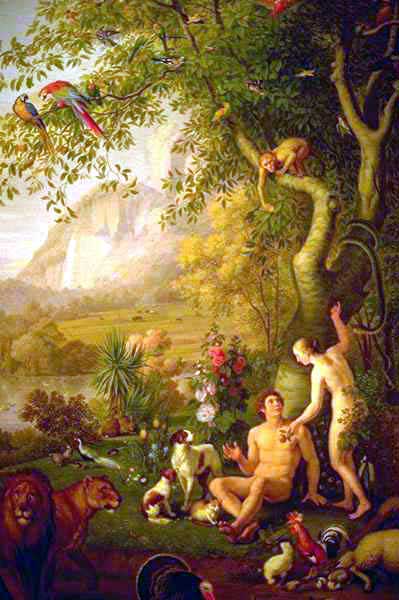
Finding the Kingdom of Heaven within ourselves. Many have compared the Temple to the Gate of Heaven, where you enter into the Spiritual realm of God. Hugh Nibley has said a temple represents both the center of the Universe where the physical and spiritual unite. It is at the Temple that we are reminded of both our place and our potential in the vastness of Eternity. We follow Adam and Eve from the Garden of Immortality and stagnation, the growth and sacrifice of Mortality, and finally to the Exaltation and Eternal Life of the Celestial World. Our mission and destiny is brought to rememberance. We are promised the possibility of becoming the seed of the Son of God.

Making Covenants and symbolically utilizing the Atonement. Latter-day Saints are a covenant people. Like many other Christians, we are asked to take upon us the name of Christ. It is in the Temple that we most boldly take on the blessing and the challenge to become more like Christ in our conduct and faith. We make promises to remain moral individuals, and Loyal to Christ and what we consider to be His Church on Earth. In return, and through symbolic actions, we are able to progress and change through the Atonement of Christ toward Exaltation.

Bring Salvation to others. The most important purpose of the Temple is to bridge the gap between the living and the dead. Modern prophets, starting with Joseph Smith, have emphasised this aspect of Temple service. Joseph Smith explained it best in Doct.& Cov. 128 when talking about work for the dead:

17 And again, in connection with this quotation I will give you a quotation from one of the prophets, who had his eye fixed on the restoration of the priesthood, the glories to be revealed in the last days, and in an especial manner this most glorious of all subjects belonging to the everlasting gospel, namely, the baptism for the dead; for Malachi says, last chapter, verses 5th and 6th: Behold, I will send you Elijah the prophet before the coming of the great and dreadful day of the Lord: And he shall turn the heart of the fathers to the children, and the heart of the children to their fathers, lest I come and smite the earth with a curse.

18 I might have rendered a plainer translation to this, but it is sufficiently plain to suit my purpose as it stands. It is sufficient to know, in this case, that the earth will be smitten with a curse unless there is a welding link of some kind or other between the fathers and the children, upon some subject or other—and behold what is that subject? It is the baptism for the dead. For we without them cannot be made perfect; neither can they without us be made perfect. Neither can they nor we be made perfect without those who have died in the gospel also; for it is necessary in the ushering in of the dispensation of the fulness of times, which dispensation is now beginning to usher in, that a whole and complete and perfect union, and welding together of dispensations, and keys, and powers, and glories should take place, and be revealed from the days of Adam even to the present time. And not only this, but those things which never have been revealed from the foundation of the world, but have been kept hid from the wise and prudent, shall be revealed unto babes and sucklings in this, the dispensation of the fulness of times.


when the purpose of the Temple is realized, both in the work and in ourselves, the Kingdom of God will become stronger. Both the living and the dead will have a greater hope in Christ and His Atonement. The dream of Zion will possible when more Latter-day Saints take the Temple seriously for what it is; a House of God for the Salvation of His Children.

Saturday, March 18, 2006

Readings for Understanding the Temple

Continuing with this month's theme of understanding the Temple more fully, I have made a list of my favorite sources. As you can see the list has been broken up into two catagories. The first group is writings by Mormons and the other is not. Please be warned: all these books are heavy reading. The usual introductory recommended is not listed.

LATTER-DAY SAINT SOURCES FOR TEMPLE UNDERSTANDING:

My Father's House: Temple Worship and Symbolism in the New Testament
by Richard Neitzel Holzapfel


The Gate of Heaven by Matthew B. Brown


Temple and Cosmos by Hugh Nibley


The Sermon at the Temple and the Sermon on the Mount: A Latter-day Saint Approach by John Welch


The Lost Language of Symbolism by Alonzo Gaskill


NON-MORMON SOURCES FOR TEMPLE UNDERSTANDING:

The Great Angel by Margaret Barker


The Revelation of Jesus Christ: The Revelation of Jesus Christ: Which God Gave to Him to Show to His Servants What Must Soon Take Place (Revelation 1.1) by Margaret Barker


You can find more information about Margaret Barker at Thinly Veiled where there is a list of her works with excerpts.

The Hero with a Thousand Faces by Joseph Campbell


The Sacred and Profane: The Nature of Religion by Mircea Eliade


Images and Symbols by Mircea Eliade


More information can be found at
Resources for Understanding the History
and Symbolism of LDS Temples
for a larger comprehensive list.

Friday, March 17, 2006

Garden of Eden and Evolution as One

This is a post I made as a guest blogger over at The Blogger of Jared about how Evolution and the Garden of Eden might be related. There are some points that I might return to later, such as the idea that the fall brought death; the thorniest issue. You can read other people's responses at the link, or add your own here.


To put it simply, I believe in Evolution as part of the Creation. I also believe in The Garden of Eden, complete with real persons named Adam and Eve. This presents a serious conundrum. Part of our problem is that we are trying to put a round block into a square peg. The two things of The Garden of Eden and Biological Evolution just don't seem to go together. When we try reconciliation, it only ends up messing with one or the other. The importance or existence of one of the two becomes seriously questioned. Assuming that both are correct, how can they be made to co-exist? For years I have been doing a little theological speculation thought experiment on the subject. From my research I have come to a tentative conclusion that they can relate.


First, we must realize that scientific understanding of Creation is not too different from the Scriptural explanations of how it all started. The first day was about the creation of the elemental forces of the universe, particularly light (Gen 1:1-5). The second day talks about the Earth's planetary formation. The land and water are separated from each other, with water probably becoming liquefied below and gaseous above (Gen 1:6-8). After this, the Scriptural account becomes more scrambled from what we know scientifically. Most of the out of order information has to do with the development of time (Abraham 4:13-17). It is more of a conceptual than a creative development, finding uses for what has already been formed.

It is at this point that a very sketchy presentation of Evolution can be read in the material. The first mention of living things is plants, rather than animals (Abraham 4:11-12). This seems consistent with what is known of Earth's development. Plants were the first living things to develop on land. Animals followed later. Reading about the development of animal life can be interpreted to support the idea that life originated in the oceans, as Evolutionary theory postulates:

And the Gods prepared the waters that they might bring forth great whales, and every living creature that moveth, which the waters were to bring forth abundantly after their kind; and every winged fowl after their kind. And the God's saw they would be obeyed, and that their plan was good. (Abraham 4:21)


The Scriptures then state that every creature will bring forth after their kind. For those who don't believe in Evolution, they see this as an indication that changes can't happen. A lion can't bring forth a bear. It wouldn't be after their kind. However, the theory of Evolution doesn't say that is possible either. Any developments would be dependent on the sharing of DNA between two parents. Drastic mutations would hurt the chances for survival. Besides, fossil discoveries seem to provide strong evidence that life has never been static. To me it is about reading two different versions of the same event. God simply didn't fill in the details.

At this point the Garden of Eden must be introduced. Reading of Adam and Eve seems to be a refutation of all that went before. I don't believe that is completely true. Perhaps they have little to do with each other. They both happened, but not for the same reasons. Evolution was in one corner developing life and The Garden in another changing human nature.

The Garden of Eden was most likely the first Temple on the Earth (see The Gate of Heaven by Matthew B. Brown, pg. 26 - 33), and by nature separate from the rest of the planet. Some similarities to the Temple are the Presence of God, a central location, a place where sacred rivers run (see Rev. 22:1), having precious materials that High Priests wear, and etc. It is clear from reading the Scriptural account that the Garden of Eden was a specific place. Modern Revelation has located the Garden of Eden having been in Jackson County Missouri. Like the City of Enoch, it no longer exists on the Earth and might have been taken up to Heaven.

Eventually, although it would have to near the end of Evolution, Adam and Eve were kicked out of the Garden of Eden. It was at this time when the Lord God made coats of skin and clothed them (Moses 4: 27), sending them back to "till the ground from whence he was taken"(Moses 4:29). Adam and Eve had once again become part of the world we know. Pres. Brigham Young said that Adam was born like any person. Perhaps Adam and Eve were taken from the Evolutionary process, made a Son and Daughter of God through Temple ordinances, and returned back when they had become spiritually prepared for a life of choice.

Saturday, March 11, 2006

Discovering the Sacred in the Temple

Years ago I first entered the Temple as an emerging adult about to enter the mission field. Although many memories of that experience are vague, there were some thoughts and feelings that are not forgotten. Like many who enter for the first time, it is never what was imagined even after careful (and proper) research. It was strange to see and participate in such a richly symbolic activity. I think, however, that first shock is for a purpose known as initiation. Many cultures have unique and demanding rituals that bridge the gap between the child and adult world. Two reactions are possible. The first is fear of the unknown and never going back. The other, and the one that brought me back, was a need to understand. Years later, I would like to leave some suggestions how to get more out of Temple attendance.

Do not be afraid to return. This should go for all those who might attend for the first time, or have not gone back. Spiritual rewards will outstrip any discomfort from the unusual experience. There are some things in life that must be carefully cultivated in order to enjoy. Learning from the Temple takes time, patience, and prayerful contemplation. Searching the Scriptures is essential to coming to understand the symbolism and meaning behind the experience.

Become familiar with Covenants. We take upon ourselves the name of Jesus Christ at the time of Baptism. This includes a covenant to obey the Commandments of God:

15 Yea, I say unto you come and fear not, and lay aside every sin, which easily doth beset you, which doth bind you down to destruction, yea, come and go forth, and show unto your God that ye are willing to repent of your sins and enter into a covenant with him to keep his commandments, and witness it unto him this day by going into the waters of baptism.

16 And whosoever doeth this, and keepeth the commandments of God from thenceforth, the same will remember that I say unto him, yea, he will remember that I have said unto him, he shall have eternal life, according to the testimony of the Holy Spirit, which testifieth in me.

- Alma 7:15-16


The Temple contains similar covenants we have made at the time of our Baptism. They are split into three different areas. The first is covenants we make as individuals. the second set of covenants we make in regards to family responsibilities. The last set of covenants has to do with our membership in the community of Saints. Become familiar with the Ten Commandments and that we should love God and neighbor. Finally, we should do more than recite covenants, but live them with faith. The more covenants we keep, the more blessings we reap.

Recognize the meanings of symbols. Surprisingly, most of the symbolic meanings found in the Temple experience are spelled out in either words or relationships. Watch carefully what happens and listen for any narrative explanations. The key to undestanding a great deal of the Temple is knowing we are the central focus. It is a representative journey from pre-mortal existance to our return to Heavenly Father through the Atonement of Jesus Christ. This is where a good understanding of Scripture is most helpful, noticing the various allusions to scriptural teachings introduced in new and personal ways.

Use the less understood parts to your advantage. Memory is a vital purpose of the Temple experience. It seeks to bring to mind our place in the Universe and Plan of Salvation. If you do not understand something, try to at least remember it during the rest of the time. It could end up relating to another thing you do undestand, bringing meaning to both. Even if you still don't understand it, focus on what you do know and remember what you don't for later. Part of the joy of continually going to the Temple is that we learn something new each participation.

These are, from my experience over the years, important steps to gaining a sacred respect for the Temple. It takes more than a passive response to become spiritually invigorated by the rich texture that is the Temple.

Let us truly be a temple-attending and a temple-loving people. We should hasten to the temple as frequently, yet prudently, as our personal circumstances allow. We should go not only for our kindred dead but also for the personal blessing of temple worship, for the sanctity and safety that are within those hallowed and consecrated walls. As we attend the temple, we learn more richly and deeply the purpose of life and the significance of the atoning sacrifice of the Lord Jesus Christ. Let us make the temple, with temple worship and temple covenants and temple marriage, our ultimate earthly goal and the supreme mortal experience . . .

. . . All of our efforts in proclaiming the gospel, perfecting the Saints, and redeeming the dead lead to the holy temple. This is because the temple ordinances are absolutely crucial; we cannot return to God’s presence without them. I encourage everyone to worthily attend the temple or to work toward the day when you can enter that holy house to receive your ordinances and covenants. As the prophets have said, the temple is a place of beauty; it is a place of revelation; it is a place of peace. It is the house of the Lord. It is holy unto the Lord. It must be holy and important to us.

- Howard W. Hunter, “A Temple-Motivated People,” Ensign, Feb. 1995, 2

Sunday, March 05, 2006

Mormon Spirituality

Many years ago I had wondered what constituted a Mormon spiritual life. The question was brought about by critical comments that the LDS religion was mostly materialistic with its emphasis of an Earthly Kingdom of God and rejection of spirit/body dualism. Usually this criticism comes from those who either believe in "faith only" salvation or believe spiritual matters should mostly be separate from secular concerns. Research on the subject has brought me to a conclusion that might sound too much like a truism than a profound discovery. Mormonism teaches that true spirituality comes from self-sacrifice in the service toward others.

Almost from the start, the concept of self-sacrifice as spiritual power has been a central Mormon teaching. What can be considered the first Priesthood manual stated:


Let us here observe that a religion that does not require the sacrifice of all things never has power sufficient to produce the faith necessary unto life and salvation. For from the first existence of man, the faith necessary unto the enjoyment of life and salvation never could be obtained without the sacrifice of all earthly things. It is through this sacrifice, and this only, that God has ordained that men should enjoy eternal life. And it is through the medium of the sacrifice of all earthly things that men do actually know that they are doing the things that are well pleasing in the sight of God.

- Lectures on Faith, N.B. Lundwall Ed., pg 58.


The question is, to what end do we sacrifice? Christianity in general, and Jesus Christ in particular, has stated that giving of ourselves for others is the greatest form of worship. Letting go of our own wants, needs, and desires leads us closer to God and Salvation. Matthew Ch. 25: 40, 45 states:

40 And the King shall answer and say unto them, Verily I say unto you, Inasmuch as ye have done it unto one of the least of these my brethren, ye have done it unto me.

45 Then shall he answer them, saying, Verily I say unto you, Inasmuch as ye did it not to one of the least of these, ye did it not to me.


These are statements of action. The fate and fortunes of Eternity rests on what each of us do to others. We can be kind, generous, helpful, forgiving, and other positive things or we can do the opposite. Service becomes more than just an action of faith, but the very process of faith. King Benjamin in the Book of Mormon was perhaps even more blunt in connecting service with worship in his famous sermon to his people:

16 Behold, I say unto you that because I said unto you that I had spent my days in your service, I do not desire to boast, for I have only been in the service of God.

17 And behold, I tell you these things that ye may learn wisdom; that ye may learn that when ye are in the service of your fellow beings ye are only in the service of your God.

18 Behold, ye have called me your king; and if I, whom ye call your king, do labor to serve you, then ought not ye to labor to serve one another?

19 And behold also, if I, whom ye call your king, who has spent his days in your service, and yet has been in the service of God, do merit any thanks from you, O how you ought to thank your heavenly King!


Both Jesus' statements and King Benjamin's statements about service seem to suggest a royal duty for the subjects to serve others. We are, more or less, doing the will of God as Lord and King. Any less than this is actually a type of ingratitude or, in Jesus' example, disloyalty and spiritual treason. This is, in effect, a point that Abinadi was making to the Priests of King Noah. They had flaunted their positions and completely rejected the true reasons for having Priesthood authority. Instead, they try to make Abinadi into a fool by quoting Isa. 52:7 with its declaration that prophets will have positive messages. In return, Abinadi argues ( see Mosiah Ch. 15 ) only those who serve God and follow his Commandments are worthy of giving positive messages. And the only way to follow God's Commandments is by having Faith in Christ, the Son of God and Father of Prophets, who the Priests of Noah have rejected.

Faith in Christ through Service to others is the central tenent of Mormon spirituality. As LDS President Hinkley stated:

Without sacrifice there is no true worship of God. I become increasingly convinced of that every day. "The Father gave his Son, and the Son gave his life," and we do not worship unless we give-give of our substance, give of our time, give of our strength, give of our talent, give of our faith, give of our testimonies.

-Elder Gordon B. Hinkley, BYU Speaches of the Year, Oct 16, 1962.


It is time to adjust more than just our priorities. We should, as Latter-day Saints, adjust our attitude toward building the Kingdom of God. This includes doing our duties, whatever our callings, with happiness and a sense of worship. Preaching the Gospel, Perfecting the Saints, and Redeeming the Dead are acts of Faith that lead to our own Salvation. We draw closer to God by doing more for others. Service is the definition of Mormon spirituality that the theology ultimately points.

Saturday, February 18, 2006

What's in a Name? Lamanite Redux

All this talk of Lamanites and DNA is not only old, it is really meaningless. Because of a major news "story" in the LA Times, a completely irrelavant discussion has been resurrected. The more informed treatments can be found here, and this place, and finally here with plenty of counter arguments. Personally, I don't think DNA and what it tells us about the Book of Mormon is the correct question. What is really at issue is what does "Lamanite" and "Nephite" mean? How much of the identification is familial and how much is rhetorical? It might be a little of both and far from mainly one.

The Book of Mormon started out classifying the Lamanites as Lehi's decendants; mostly the brothers of Nephi. That is true enough. Something, however, happened that quickly made that identification muddled. Almost from the start the Lamanites consisted of at least two groups of unrelated peoples. There was Laman and Lemual and then sons of Ishmael. The Nephites had Sam and daughters (perhaps with some sons) of Ishmael. Soon, other groups start popping up everywhere. Some don't even seem to have a cursory relationship to Lehi. In fact, and this is what most Mormons miss and Hugh Nibley constantly pointed out, the primary ancestors of the Book of Mormon peoples were Jaredites! Nephites and Lamanites are meeting the Jaredites everywhere according to name patterns. I think the Mulekites might have been Nephites who ran into a large population of Jaredites and incorporated themselves into the political structure. Both the Mulekite Nephites and Jaredites lost their original cultural connections. The point is, there were other groups living and mingling with each other.

Along with the above diversified populations, there was an event that totally and completely destroyed the very concept of Lamanite and Nephite as family relationships. It was the coming of Jesus Christ. During his ministry both the Lamanites and Nephites, and all other peoples, became one community. It lasted at least a hundred years. After this short era of unity, Lamanite and Nephite became a religio-social designation.

4 Ne. 1: 20
20 And he kept it eighty and four years, and there was still peace in the land, save it were a small part of the people who had revolted from the church and taken upon them the name of Lamanites; therefore there began to be Lamanites again in the land.


It was a self-identy more than family lineage; although some sense of relationships might have inspired the usage. Even then, the designations became fragmented into other sub-groups. One of the most major writers/editors of the Book of Mormon seemed aware that his literally a Nephite was important enough to mention. There were plenty of other groups who weren't.

Mormon 1: 5-10
5 And I, Mormon, being a descendant of Nephi, (and my father’s name was Mormon) I remembered the things which Ammaron commanded me.

6 And it came to pass that I, being eleven years old, was carried by my father into the land southward, even to the land of Zarahemla.

7 The whole face of the land had become covered with buildings, and the people were as numerous almost, as it were the sand of the sea.

8 And it came to pass in this year there began to be a war between the Nephites, who consisted of the Nephites and the Jacobites and the Josephites and the Zoramites; and this war was between the Nephites, and the Lamanites and the Lemuelites and the Ishmaelites.

9 Now the Lamanites and the Lemuelites and the Ishmaelites were called Lamanites, and the two parties were Nephites and Lamanites.

10 And it came to pass that the war began to be among them in the borders of Zarahemla, by the waters of Sidon.


Criticism has been made that early and many modern LDS Church authorities have said that all Native Americans are Lamanites. It is claimed this make it official doctrine. The one place that should set the tone for official doctrine, the Doctrine and Covenants, is not as clear on the subject as first supposed. The Doctrine and Covenants follows the Book of Mormon in catagorizing and then qualifying the names.

D&C 3: 16-20
16 Nevertheless, my work shall go forth, for inasmuch as the knowledge of a Savior has come unto the world, through the testimony of the Jews, even so shall the knowledge of a Savior come unto my people—

17 And to the Nephites, and the Jacobites, and the Josephites, and the Zoramites, through the testimony of their fathers—

18 And this testimony shall come to the knowledge of the Lamanites, and the Lemuelites, and the Ishmaelites, who dwindled in unbelief because of the iniquity of their fathers, whom the Lord has suffered to destroy their brethren the Nephites, because of their iniquities and their abominations.

19 And for this very purpose are these plates preserved, which contain these records—that the promises of the Lord might be fulfilled, which he made to his people;

20 And that the Lamanites might come to the knowledge of their fathers, and that they might know the promises of the Lord, and that they may believe the gospel and rely upon the merits of Jesus Christ, and be glorified through faith in his name, and that through their repentance they might be saved. Amen.


Even in the Doctrine and Covenants there is a hint of a political, as much as lineal, meaning behind the names when it comes to teaching the gospel. A rejection of the gospel seems to be one of the ways to gain the designation "Lamanite" beyond who were your ancestors.

D&C 10:48
48 Yea, and this was their faith—that my gospel, which I gave unto them that they might preach in their days, might come unto their brethren the Lamanites, and also all that had become Lamanites because of their dissensions.


It would be nice to know what percent is "brotheren" and "dissenters" in the makeup. As it is, that could be anyone's guess. There is no doubt that the names Nephite and Lamanite still hold very specific family meaning. When you speak of Lamanite, it can very well be understood as having a relation to Lehi. However, the relationship is thin. It is more like saying Latter-day Saints are of the House of Israel. True enough from a spiritual standpoint. If we are to believe the Scriptures that is true from actual fact; as long as we understand the dilution of the original Israelite blood in our Gentile genes. So, from that perspective the Lamanites are the main progenators of Native Americans. Problem is, that isn't saying much. The original gene pool was mixed up, changed, scattered, and redefined long before Columbus. The answer to the DNA question is in the Book of Mormon. It just takes some paying attention.

Sunday, February 12, 2006

Morality of Technology


I was listening to a Sunday School lesson and a comment by the teacher made me pause. He said, to paraphrase, technology is not good or evil only by how it is used. This isn't the first time the statement has been made. For example:

In contrast, as we look at the media today from any vantage point, I think we would have to say that Lucifer’s influence is far more prevalent than the Lord’s. We are in a war. This war is the same war that raged in the premortal world. Lucifer and his followers are committed to an evil direction. . .

. . . As we consider the importance of nourishing our intellects with the promising potential of superhighway resources, we must be ever cautious about our choices of programs and the impact of media upon our lives. Those who understand our Heavenly Father’s eternal plan for the joy and happiness of His children will be better prepared to not only make good choices but also provide good choices as the information superhighway rolls across the world. The computer, television, satellite, microchip, and even the telephone all can bless and enhance our lives, or can make them miserable.

- M. Russell Ballard, “Filling the World with Goodness and Truth,” Ensign, July 1996, 10


There is little question that technology has its advantages. The New Testament is full of Paul complaining of his inability to teach to various congregations because of the time it took for words or persons to travel. Today a modern Apostle can be heard almost instantaneously or travel to the far reaches of the world in only days. Problem areas are easily accessable and organization a simple click on the keyboard. Through the marvel of television and satallites the words of Apostles and Prophets cannot be mistaken. Faces can become as familiar as if they had visited in person.

Despite all that, one must look at technology with the criterion of "use" to see if it is more good or evil. My conclusion is that technology is mostly evil. Television, radio, and the Internet are largely filled with pornography, hatred, violence, and "satanic" ideology. Most other inventions have complicated our lives at the same time it has made them easier - as recent disasters have proven such complete lack of survival skills without vast amounts of outside help. Even though we now have controlled or eradicated ancient deseases or physical problems, weapons have become deadlier to the point of easily destroying humanity off the face of the Earth. Technology has even created greater gaps between the rich and the poor, with more toys available and less things the poor can do without.

One possible solution is to seriously limit the amount of radio, television, and Internet within our lives. Become more aquanted with making things by hand and interacting face to face as friends and neighbors. Humanity has become a vast network, but not a commmunity. Often Mormons are mistaken for Amish who reject most modern inventions. Perhaps that isn't a bad group to be associated. It is time for Latter-day Saints to become less willing to take technology for granted. We are too lazy with important things, too busy with superficial things, and too distracted from spritual things. Indications are that both our physical and spiritual health is at risk.

I would recommend reading Find Your Own Grove, although I disagree with its conclusions. The problem is not our inability to interact with nature, but to find silence that is important to contemplation. Too many voices are shouting for our attention and we allow them too much space. Lets share some ideas how to declutter the techno-jungle and pop-culture pandering.

Saturday, February 04, 2006

Era of Religious Respect?

The use of "respect" rather than "tolerance" in the title is very important. They are not the same words, and can have very specific meanings. Toleration is often used as a blunt instrument that silences voices and forces acceptance with tyrannical consiquences. To respect something doesn't always mean accepting as of equal importance. Respect is why I feel it is right for the cartoons to run and it is right for the Mulsims to demostrate against them. At the same time, intolerance is the reason why I feel it is wrong for the cartoons to run and it is wrong for the Muslims to demonstrate. Respect is about accepting the existance and important of viewpoints. Tolerance is simply intolerance of particular viewpoints that aren't within the accepted norm of permissable discussion.

The Muslim outcry over blasphemous cartoons has created a discussion between freedom of expression and decourum, democracy and religious passion. It is a discussion that secularists have thought unworthy of consideration when it comes to Christians. For too long Western secularism, especially of the Hollywood kind, has treated Christian beliefs as childish at best and dangerous at worst. What has the Christian reaction been? A stimied, but gradually louder, voice of dissent.

Hopefully the demonstrations by vocal Muslims will energize religious people in the West to resist their own beliefs getting brutalized. The problem is that Muslim demonstrators should not be role models for the future war against secularized society. Militantism is considered both unChristian and an exchange of one bad thing for another. It is, however, the resistance that Christians should emulate as they contend for the faith. But, there is something about taking actions that speak louder than words as long as it isn't violent. As examples:


NBC pulls the plug
on 'Book of Daniel'


Nashville's WSMV-TV General Manager Elden Hale, Jr. said: "Based on a review of the first three episodes and the clearly voiced concerns from our viewers, we have determined that the program 'The Book of Daniel' is not appropriate for broadcast television in this community."

After the first three episodes, only Burlington Coat Factory was left as a national sponsor.

The heat began to generate for the show following WND's first story. Shortly afterward, the American Family Association launched a national boycott, citing WND's story.

AFA Chairman Donald E. Wildmon said NBC's decision to cancel the program is instructive.

"This shows the average American that he doesn't have to simply sit back and take the trash being offered on TV, but he can get involved and fight back with his pocketbook," he said.

The network had to absorb millions of dollars in losses each time it aired the program, Wildmon pointed out, because the show's sponsors bailed out.

"We want to thank the 678,394 individuals who sent e-mails to NBC and the thousands who called and e-mailed their local affiliates," he added.

Besides Nashville, other NBC affiliates across the nation either never aired the show or stopped broadcasting it. They included Hattiesburg, Miss.; Meridian, Miss.; Jackson, Miss.; Amarillo, Texas; Wichita, Kan.; Beaumont, Texas; and Terre Haute, Ind.

Only six episodes of the "Book of Daniel" were shot. Kevin Reilly, NBC Entertainment president, said the network's reluctance to order more episodes had more to do with the series' sluggish ratings performance than controversy.


NBC halts Britney's
crucifixion mockery

Reacting to pressure from Christian groups, NBC canceled an episode of "Will & Grace" that featured Britney Spears as a conservative who hosts a cooking segment called "Cruci-fixin's" on a Christian TV network.

NBC last week was forced to pull its highly touted new show "The Book of Daniel" because of charges its portrayal of Jesus was blasphemous.


The point is that Western society should learn how to be more respectful of faith. It shouldn't take a Fawtwa like stance in the decision to show respect. On the other hand, all religious people should understand enough of how Muslims feel about the sacred to reject the violence without throwing out the message.

It still leaves a question of how Mormons should respond to disrespect for the sacred. After all, there are some things in the LDS religion that have the same "don't touch" policy (although for different reasons) that Muslims do about their prophet. Should we take a stronger stand or ignore it as immature posturing?

Monday, January 30, 2006

No More Boring Sacraments

Christian A. Johnson in his "Seven Deadly Sins of Sacrament Meeting Talks" makes the following list:

1) The Sin of Unpreparedness.
2) The Sin of Time Enroachment
3) The Sin of Out-and-Out Time Theft
4) The Sin of Repeating Urban Legends
5) The Sin of Drawing Upon Inappropriate Material
6) The Sin of "Too Much Information"
7) The Sin of Casting Blame on Others for Your Speaking Assignment

To the above list I would like to add:

8) The Sin of Not Using the Scriptures. I don't know how many talks I have heard that pretty much contain Sin Six and Sin Four with almost no mention of the Scriptures. We should be teaching each other the Gospel, and it is in the Scriptures that the gospel truths are most readily available. Reading long excerpts from stories out of the Church magazines or any other material goes in one ear and out the other for me. It would be great to get people's insights into what they have learned or thought about as they Feast Upon the Word, rather than regurgitate another's creative tale spinning.

9) The Sin of Political Speaches. Believe it or not, even Conservative statements over the pulpit make me nervous. We should make sure what we say is backed up by recent prophets and plenty of scriptures. Quoting a politician, pundit, or pop culture is probably not a good idea. Small doses might be fine if carefully used.

I would like to elevate the Seventh Sin to the First slot. I love giving talks. Many years of my life have been devoted to the study of the gospel, so it is a thrill to get up and share what I have learned. Of course, it helps that I love getting in front of audiences as long as I have a reason. But to get up and say from the first "when the Biship called I hoped it wasn't about giving a talk" is a complete turn-off. It is the same for me as saying "I didn't want to do this and therefore I don't know why you should listen." This practice of voicing your disfavor for talking has got to stop!

Maybe I should set an example (I already completely skip out on saying anything about the act of speaking when giving a Sacrament talk) and just give a positive statement every time I get up. It would go something like this: It is so nice to get up in front of this ward and express my heartfelt gratitude for the gospel. When the Bishop asked me to give a talk on . . . add subject . . . it gave me the opportunity to revisit my favorite scripture . . . add scripture.

No matter what the probems might be that hamper the effectiveness of Sacrament meeting talks, lets all work together to improve our experiences. We all know how boring a group of lay speakers are. Something must be done to benefit the soul more fully during a time when we should be strengthening each other. Certainly its not about having a professional clergy. Rather, its about wishing for the voice of an angel and then reaching for the closeness of the Spirit in our communications. Its time to start a new crusade to rid the Sacrament Meetings of horrible talks. Especially when most people can do better when they put their hearts and minds into a project of personal importance. And the gospel is important.

Now lets all say together in our most enthusiastic voices: I am glad to be giving this talk today.

Saturday, January 28, 2006

The Family and Gender Success

It used to be that the girls were in trouble, and feminist ideas of equality would save the day. The main weapon of "equality" was to insist there was no difference between the sexes and attack males as if they were in the way. It appears that the technique is working. According to The Trouble with Boys by Peg Tyre, boys are turning off and tuning out education. Girls, on the other hand, are at least succeeding. This might be good news to those who believe in a Feminist utopia where women are significant and men are . . . something else. But, for those who care about the future of everyone this can only be bad. After all these years of equality of the sexes we are learning by science and society that there really are differences between males and females.

According to the blog commentary Does Our Society Treat Boys Like Defective Girls, society is most likely going to ignore the obvious:


Despite this crisis, our society is working hard to promote tolerance to the point of destroying the institution we need most – the traditional two-parent family with both a male and a female role model, where both parents fulfill their responsibilities to each other and to their children. Even as the pop culture regularly portrays men as unfeeling dolts, the tolerance crowd continues to blindly claim that their proposals will not harm the basic institution of our society, but long-term evidence shows that this is not true.


Ironically, the same same article rejects what it just suggested:

I’m not advocating a return to obviously bad sexist attitudes.


It is "bad sexist attitudes" that we need to return. I don't mean seeing women as inferior, unintelligent, and only objects of desire. Rather, I mean the attitudes that feminists would consider undesirable. That would include women as mothers and nurturers and men as providers and protectors. Latter-day Saints were warned by prophets in The Family: A Proclamation to the World exactly what happens when men, women, and children are not in stable relationships. Society sufferes and everyone loses. Girls and Boys don't need role models. They need loving and traditional parents:

The family is ordained of God. Marriage between man and woman is essential to His eternal plan. Children are entitled to birth within the bonds of matrimony, and to be reared by a father and a mother who honor marital vows with complete fidelity. Happiness in family life is most likely to be achieved when founded upon the teachings of the Lord Jesus Christ. Successful marriages and families are established and maintained on principles of faith, prayer, repentance, forgiveness, respect, love, compassion, work, and wholesome recreational activities. By divine design, fathers are to preside over their families in love and righteousness and are responsible to provide the necessities of life and protection for their families. Mothers are primarily responsible for the nurture of their children. In these sacred responsibilities, fathers and mothers are obligated to help one another as equal partners. Disability, death, or other circumstances may necessitate individual adaptation. Extended families should lend support when needed.

We warn that individuals who violate covenants of chastity, who abuse spouse or offspring, or who fail to fulfill family responsibilities will one day stand accountable before God. Further, we warn that the disintegration of the family will bring upon individuals, communities, and nations the calamities foretold by ancient and modern prophets.

Saturday, January 21, 2006

Loss of Bible Truths: A New Interpretation

It is often a Mormon viewpoint that the Bible is, regardless of the divine nature of its existance, textually problematic. The problems with the text are believed to have created huge holes in theological understanding. Usually it is an argument based off of Joseph Smith's statements such as:

From sundry revelations which have been recieved, it was apparent that many important points touching the salvation of men, had been taken from the Bible, or lost before it was compiled.


And perhaps from one of the most repeated quotes:

Ignorant translators, careless transcribers, or designing and corrupt priests have committed many errors.


Ironically, all major Mormon doctrine has been found in the Bible, regardless of the agreement of the textproof interpretation. The "translation" of the Bible by Joseph Smith hasn't even played a very important role in LDS Bible reading, acting more like supplimental material or grammatical correctives (part of this is because of historical rather than institutional reasons). One of the most common questions of non-Mormons to Mormons when they learn of how the Bible is viewed is why there are not Mormon specific translations beyond Joseph Smith's Translation (JST) by revelation. This is perplexing to some considering the JST isn't seen as complete or the last word and the number of Bible translations currently available. Certainly the Mormons would want their own evaluation of older documents with such a critical view of Bible completeness and innerancy.

I believe that answer is in how Nephi sees the apostacy and restoration in relation to the Bible at the dawn of the Christian era. One of the more mysterious comments is that the Bible came from the mouth of "a" Jew, rather than several individuals. It is clear from the context of the vision that Jew would be Jesus Christ. Related to this is the idea that the Bible is filled with Covenants that the Gentiles saw as precious. So, the Bible is first and foremost the Covenants between Jesus Christ and Israel, with the Gentiles taking them to heart.

At this point the Bible ". . . go[es] forth from the Jews in purity unto the Gentiles, according to the truth which is in God." There are no problems so far with the text or presentation. One could almost say it comes closest to the innerancy idea. But, things seem to go wrong. What happens next is what is usually interpreted as a corruption of the Scriptures:

And after they go forth by the hand of the twelve apostles of the Lamb, from the Jews unto the Gentiles, thou seest the formation of that great and abominable church, which is most abominable above all other churches; for behold, they have taken away from the gospel of the Lamb many parts which are plain and most precious; and also many covenants of the Lord have they taken away.


At this point the Joseph Smith statements about the Bible are added. But, a closer look shows they are not as related as first thought. The key is ". . . they take away from the gospel of the Lamb many parts . . . ," without invoking any Scriptural text mutilation. Those without authority distort and confuse issues and theology. It is a war of ideas more than paragraphs and pages. No doubt, the plain and precious losses are connected to the Bible. This is not because of what happens to the Bible as much as with the Bible. As Joseph Smith said:

There is no salvation between the two lids of the Bible without a legal administrator. Jesus was then the legal administrator, and ordained His Apostles.


what does all this mean? It explains why most Mormons are uneasy toward Biblical Higher Criticism. There are less problems with the text than with the interpreters. Joseph Smith himself seemed not to take the English version of the Bible as completely reliable and felt comfortable comparing textual variations. He probably would be thrilled with the study of the older text; although perfering a more creative examination of epistomology. What he did not accept was a Bible without its divine meaning and miracles.

For the members of the LDS Church it might mean letting go of our own reluctance to examine critical historical Bible texts. They are flawed, but no more than any other modern variations. Mostly, however, acknowledging the problem isn't with the Bible itself can take care of many straw man arguments. The biggest of these is that Mormons are somehow hostile and distrustful of the Bible. Rather, Mormons are distrustful of interpretations of the Bible and aware that imperfection is a portal of discovery rather than reason to discard.

Friday, January 13, 2006

Yet Again: Yes Mormons are Christians

The idea that they are not is inconceivable. It bears repeating that "Mormon" is only a nickname for The Church of Jesus Christ of Latter-day Saints. Going back to the original designation doesn't refute the Christian label either. It started out as "The Church of Christ" and progressed to the lengthy name we have today. There are, of course, some reasonable assumptions why "Mormons" cannot be called Traditional or Orthodox Christians, but they are not strong enough for an all-out descrimination.

The Trinity

This is usually seen as the number one reason for excluding "Mormons" from the lexicon. The problem is twofold. First, the Trinitarian concept was a rather late theological concept. Before, that were any number of non-Trinitarian concepts of Jesus and his relationship to God. Admittedly, the most talked about are the ones that rejected Jesus' divinity. That is something that even Mormons would consider false and suspect for inclusion in the Christian demographic. But, there were still others that believed in divine subordination of Jesus to God rather than fusing them together. The only reason for the exclusion today is because of tradition built from an iron fisted council in the Third Century after Jesus and his Apostles were long dead. As the book Lost Christianities by Bart D. Ehrman suggests, there were many Christian viewpoints of considerable scope and variety. Any number of them could have defined what we now know as Christianity. It is only through a quirk of history, theological wars, and suppression has a seemingly unified Christianity developed.

The second problem is that the Trinity is not particularly Biblical, no matter how much some have continued to argue otherwise. This is not to say there are not Scriptures that bolster the general idea. However, there are plenty of equally commanding Scriptures that can show another possible belief about Jesus' relationship to God. It is beyond the scope of this article to get into that. Plenty of other people, Mormon and non-Mormon (such as Nicene Creed and Truth about the Trinity. ), have discussed the topic. The point is that the Bible doesn't exactly show who is or isn't a Christian beyond the broadest of meanings.

The Book of Mormon and other Scriptures

The idea that a belief in other Scriptures is a prelude to non-Christian identity is problematic in the same way as Trinitary beliefs. Before the Constantine takeover, there were many Christians with many different Scriptures. Once again, "Lost Christianities" shows how delicate a balance the Bible in its present form is to what might have been. Even today there are still argumens over what books should or shouldn't be in the Bible by Orthodox Christians. This is especially the case if considering Catholics vs. Protestants with the so-called apocrypha.

Besides, the Book of Mormon has even been characterized as uber-Christian by the very critics who argue against the Christian self-identification. I will not go so far as to say the recent label of "Another Testament of Jesus Christ" says anything for its Christianity. However, its original introduction still contains the phrase "to the convincing of the Jew and the Gentile that Jesus is the Christ, the Eternal God, manefesting Himself to all nations." The Doctrine and Covenants is no less devoid of Christian statements such as from section 20:

21 Wherefore, the Almighty God gave his Only Begotten Son, as it is written in those scriptures which have been given of him.

22 He suffered temptations but gave no heed unto them.

23 He was crucified, died, and rose again the third day;

24 And aascended into heaven, to sit down on the right hand of the Father, to reign with almighty power according to the will of the Father;

25 That as many as would believe and be baptized in his holy name, and endure in faith to the end, should be saved—

26 Not only those who believed after he came in the meridian of time, in the flesh, but all those from the beginning, even as many as were before he came, who believed in the words of the holy prophets, who spake as they were inspired by the gift of the Holy Ghost, who truly testified of him in all things, should have eternal life,

27 As well as those who should come after, who should believe in the gifts and callings of God by the Holy Ghost, which beareth record of the Father and of the Son;

28 Which Father, Son, and Holy Ghost are one God, infinite and eternal, without end. Amen.

29 And we know that all men must repent and believe on the name of Jesus Christ, and worship the Father in his name, and endure in faith on his name to the end, or they cannot be saved in the kingdom of God.

30 And we know that justification through the grace of our Lord and Savior Jesus Christ is just and true;

31 And we know also, that sanctification through the grace of our Lord and Savior Jesus Christ is just and true, to all those who love and serve God with all their mights, minds, and strength.


32 But there is a possibility that man may fall from grace and depart from the living God;

33 Therefore let the church take heed and pray always, lest they fall into temptation;

34 Yea, and even let those who are sanctified take heed also.

35 And we know that these things are true and according to the revelations of John, neither adding to, nor diminishing from the prophecy of his book, the holy scriptures, or the revelations of God which shall come hereafter by the gift and power of the Holy Ghost, the voice of God, or the ministering of angels.

36 And the Lord God has spoken it; and honor, power and glory be rendered to his holy name, both now and ever. Amen.


Baptism

It is true that Mormons reject other Christian's baptism. That they would decide to reject Mormon baptisms as legit shouldn't be bothersome. However, this is understandable only if one is arguing from an authoritative, rather than theological, standpoint. The idea of not accepting other baptisms isn't because of what one believes, but by what authority one holds. Mormons simply believe they have been given the authority to act in the name of God and that other Christian denominations do not.

It is not much different than what most Protestants think of Catholics. Then again, there are many Protestants who don't think Catholics are Christians; an even more dubious exclusion. Interesting enough, there are some Christians who don't believe in baptisms at all, even if they accept the idea of such a practice. Never in 1000 years would Mormons not consider others as Christians simply because of a matters of authority. After all, the Christian religion is still splintered over that very topic or there wouldn't be so many different denominations (that isn't the only reason, but it basically boils down to who has the authority to interpret doctrine and practice).

Concluding Thoughts

There is much more that could be said on the subject. The book Are Mormons Christians by Stephen E. Robinson is more detailed and focused on the issue. To refuse the title "Christian" to Mormons, or think it a recent ruse, is to be either ignorant of what Mormons believe or extremist sectarian. It is true that we have different ideas about Jesus Christ than most mainstreamers officially accept, but ther are plenty of Christians ( Marcus Borg comes to mind) who could be defined as less Christian than Mormons are, yet still undisputedly hold that title. A belief in a divine Jesus Christ is more than just theology for Mormons. He defines our very lives as much as any mainline Christian. To deny that Mormons are Chrisitans is to do more than argue theology. It is an insult, and those who refuse to acknowedge the Mormon self-identification know it!

Note: see Understanding the Godhead for a discussion of what Mormons believe about the relationship of Father, Son, and Holy Ghost.

Wednesday, January 04, 2006

The Future is in the Past

Wow, the Editorial It's the Demography Stupid by Mark Steyn is very impressive. I don't know if this is particularly of Mormon interest, although it mentions Mormons and deals with a very Book of Mormon subject. I have been having the same ideas for some time about the ultimate defeat of liberalism by its own sword of human-hatred and bread and circuses in the name of human rights. Ironic that the ones that are screaming "human rights" and "diversity" will ultimately be the ones that usher in the exact opposite.

For conservative religions that will be both good and bad. Good, because the liberals will finally lose the culture war by fiate. The morality of the Godfearing will be back in world wide vogue. Bad, because the ones they are opening the doors to are not interested in any kind of human rights. And that is what Mormons will have to face in the next 50 to 100 years. Why must societies either become libertine godless immorals or absolutist god fearing hoards? Zion will definantly be born in pain, tears, and blood.

Some fine gems to quote:

The design flaw of the secular social-democratic state is that it requires a religious-society birthrate to sustain it. Post-Christian hyperrationalism is, in the objective sense, a lot less rational than Catholicism or Mormonism. Indeed, in its reliance on immigration to ensure its future, the European Union has adopted a 21st-century variation on the strategy of the Shakers, who were forbidden from reproducing and thus could increase their numbers only by conversion. The problem is that secondary-impulse societies mistake their weaknesses for strengths--or, at any rate, virtues--and that's why they're proving so feeble at dealing with a primal force like Islam.


Read this one and think of the Gadianton Robbers who could only be destroyed when the society rejected them without accomidation:

That, by the way, is the one point of similarity between the jihad and conventional terrorist movements like the IRA or ETA. Terror groups persist because of a lack of confidence on the part of their targets: The IRA, for example, calculated correctly that the British had the capability to smash them totally but not the will. So they knew that while they could never win militarily, they also could never be defeated. The Islamists have figured similarly. The only difference is that most terrorist wars are highly localized. We now have the first truly global terrorist insurgency because the Islamists view the whole world the way the IRA view the bogs of Fermanagh: They want it, and they've calculated that our entire civilization lacks the will to see them off.


And Satan slowlyand carefully leads us down to Hell. We worry about the world environment decay and don't see our own personal moral decay:

There will be no environmental doomsday. Oil, carbon dioxide emissions, deforestation: none of these things is worth worrying about. What's worrying is that we spend so much time worrying about things that aren't worth worrying about that we don't worry about the things we should be worrying about. For 30 years, we've had endless wake-up calls for things that aren't worth waking up for. But for the very real, remorseless shifts in our society--the ones truly jeopardizing our future--we're sound asleep. The world is changing dramatically right now, and hysterical experts twitter about a hypothetical decrease in the Antarctic krill that might conceivably possibly happen so far down the road there are unlikely to be any Italian or Japanese enviro-worriers left alive to be devastated by it.


I think the first half and the last sentence are significant. As much as I dislike Clinton and his kind, I don't think its important to the main point:

The latter half of the decline and fall of great civilizations follows a familiar pattern: affluence, softness, decadence, extinction. You don't notice yourself slipping through those stages because usually there's a seductive pol on hand to provide the age with a sly, self-deluding slogan--like Bill Clinton's "It's about the future of all our children." We on the right spent the 1990s gleefully mocking Mr. Clinton's tedious invocation, drizzled like syrup over everything from the Kosovo war to highway appropriations. But most of the rest of the West can't even steal his lame bromides: A society that has no children has no future.

Saturday, December 31, 2005

Illegals and the Church

The Church of Jesus Christ of Latter-day Saints has tried to add a provision in United States law protecting Churches from illegal immigration prosecution. I applaud that they are trying to make changes legally, but saddened that it goes against the very ideas of why there are immigration laws. The protection of both everyday citizens and the whole nation are at the mercy of illegal immigrants flaunting the practically open boarder policy. We need to get tougher with the laws we do have and with teeth!

Well, I must say that this issue has made me decide that if I knew someone was an illegal immigrant I would turn them in regardless of religion. This is partly because I don’t believe it is equal to speeding, but more closely related to an invasion and act of war; although not necessarily the same thing. In fact, if I learned someone was an illegal alien I would neither baptise or give a calling to that person. I have never been in that situation that I know of, but my feelings are set! Now, the question would be what consiquences it would have for me to refuse. Does anyone know what has happened to someone who has refused a baptism or ordination? Is there eclesiatical reprimanding or simply passing the responsibility? At any rate, I would turn them in to the authorities as enemies of national security.

Now, I am not against changing the law to make it more streamlined to legally enter the U.S. (although a blanket allowance is NOT an option I will accept). However, until we find a way to make it less uncomprehensible for immigrants to enter legally and protect the already legal citizens at the same time, than I want a moritorium on immigration other than with very strictly enforced visas.

My own opinion about the actions of the Church? Perhaps they should rethink how they do religious business until the laws change. In the past I can see how they could turn a blind eye as everyone else seems to have done the same and made immigration law into no-law. Currently, however, that is not the case and the Church should start following the law. It is true that immigration is a government, and not eclesiastical, issue. However, the Church's involvement in law making has changed that status at least periferally. I am not against the Church trying to influence and change the law. I am, and so are many LDS members, against it breaking the law on an issue that doesn't seem moral enough for civil disobediance justification.

To answer a few questions brought up at another blog.


Would you still be for it if you knew that such enforcement would increase the cost of a head of lettuce to $6.35 (as someone mentioned earlier)?


Yes, it is a small price to pay to protect the United States from the influx of murderers, rapists, and those who have no business getting here without going through proper channels. I would certainly not move to another country without doing whatever was needed legally to live in, say, Canada. It isn't about money. Its about national security and doing the right thing!

what about good Mormon employers (and I wouldn’t be surprised if there are a few here in the Phoenix area that do this) who stop by the open air labor market and pick up a few guys without papers for some casual construction-type labor?


They are breaking the law and acting dishonest. This should cause them to rethink their worthiness to go to the Temple. This goes beyond the "speeding" argument as I have said above, because it is close to an invasion; usually considered an act of War by other nations.


Would you feel compelled to turn Bro. Employer in for labor law violations? He’s violating The Law as well!


Actually, I would follow the gospel ideal first. Go to that person and explain what you find seriously wrong with what they are doing. If they continue to support illegals I would think of raising my hands in objection to callings within the Church. Finally, after deliberation and objection, I would turn them in for violating the law.


I have no qualms about this one bit! Its time to "lay down the law" in order to protect the U.S. against foriegn invaders who can do harm and just slip away into the dark mists of Mexico. The other alternative is that if you are an illegal who breaks the law, then instant death penalty no matter how small the infraction. After all, you aren't really a citizen and could just as easily be a spy or terrorist. Due process of guilt or innocents is, of course, expected. If found innocent they should immediately be sent back to where they came from. Extreme, but it might deter the more sinister elements from deciding its easier to do their damage over the boarder and on U.S. soil. If they want in, they should be documented and easily traced with a declaration of discernable reasons for entering.


Like I said above, I am not against streamlining the immigration laws making it less confusing to get in. What I am against is making it so easy that any can get in, or not doing something about those who are currently getting in and getting away with it against the moral and physical safety of this nation. I know of no nation that is so open, against its own laws, to allowing people from other nations to willy nilly come right in. My guess is that even Canada isn't so open; or at least probably follows its own lenient laws about citizenship.

Saturday, December 24, 2005

Narnia, E.T., and Mormon Story Telling

Recently I was able to see the Narnia film and was thrilled by its faithfullness to the book. Aside from that, it was a beautiful movie filled with great visual moments. The acting could have been better, but children have not been known for outstanding performances. Aslan was one of the best mostly CGI creatures, aside from Golum, every created. He had a natural grace and movement to him that might only be matched by King Kong if the reports I am hearing of that movie are correct. Sadly, the great awe felt for Aslan in the books could not be translated easily. It was hard to see the connection the Children developed for Aslan, and made his death of lesser emotional power than the books delivered. Sometimes well written words speak a thousand pictures.

What was more evident than the books was the Christian symbolism, as it wasn't hidden behind descriptions and lengthy dialogue. For some who saw the movie, particularly Christians of zeal and critical of Hollywood and modern culture, that was the most important function of the movie. Aside from some who see magic and fantasy of any kind as satanic, this was a chance to preach and teach the message of Jesus' suffering and saving. It was a missionary moment for the moment. That is where the problem starts for this movie and Mormon fiction.

In the early 80s an even bigger film, E.T., hit theaters. The movie was touted as family friendly and emotionally touching. What it wasn't, from any information available, was seen as a Christian missionary moment. That can easily be understood. The main characters were from a divorced family, it had slight profanity, good and evil were hardly mentioned, and it was written and directed by a social Jew. Yet, the story itself had many of classic elements of Christian symbolism and some of it subtle. Most of the symbols came from the main character and alien E.T. He was not of this earth, he had healing powers, he took upon himself at least Elliot's experiences, He suffered in a natural setting, died and was placed in a tomblike encasing, came back alive from his own power, and left into the sky by spaceship with a careful expression of faith in him to remain behind. Even the movie poster had religiously symbolic power, with the finger of Elliot and E.T. touching like The Creation painting in the Sistine Chapel.

That brings Narnia back to square one as a Christian film. What makes it Christian? The story isn't unique. The hype is as much theater as the film. It talks of good and evil, but doesn't really explain the concepts as a teaching tool. The characters are no more Christian than any other children in Disney films and the work "Christian" isn't mentioned once. In the end, the talk of a "Christian film" is vague and unfulfilled even if the recent efforts have been enjoyable.

Of course, this is directly related to Mormon fiction as the same problems arise. Is Mormon fiction defined by subject matter, cultural markers, sermonesque studies, character identity, or promotional hype? Or, like the difference between E.T.and Narnia for general Christianity, is it more about who writes and produces the material? Perhaps it is a combonation of all of these and a wider net can be cast. In casting the net wider the whole argument about "Mormon fiction" might become pendantic and self-serving. It might be more important for Mormons to write than that they write Mormonism. Taking Orson scott Card's example as a wide net caster, he has impressed many non-Mormons with the positive qualities of Mormonism with very few Mormon characters and blatant symbolism. His book "Lost Boys" is one of the most realistically realized Mormon families in all literature. Yet, their faith is only part of the story while in some instances the story itself speaks more about family relationships, good and evil, and afterlife theology. Mormon fiction will only succeed outside its own world once it becomes second nature rather than front row seat.

Saturday, December 17, 2005

The Romney Factor

There have been a spat of discussions everywhere about Romney as the next Presidential contendor. The question on most people's minds is how his Mormonism will play out. This is especially the case with the religious conservitive segment of the Republican party that is often at odds with anyone not of their flavor of Christianity or non-Christians in general. So far there hasn't been much, if any, words exchanged about Romney in the negative. The most troublesome part of the Republican party has been quiet. Of course, this is most likely because the primaries are a few years ahead.

The liberal media has stayed rather quiet as far as his religious identity, refering instead to the possible bad hype it will play in certain segments. That is most likely because of two possibilities; they want conservatives to trounce on themselves and they want to not look like the religiously biased people most of them are. That might be an added plus to his running for President when it comes to the Mormon image. So far the secular section has stayed either nuetral or positive toward the fact he is Mormon, and looked more at his career. Of course, the truely touchstone sections of the media have ignored him completely. At this time it is a wait and see moment of calm.

Some have wondered if his winning the presidency would be a bad thing, with non-stop excuse for public Mormon baiting. Past examples have shown, however, that what the person does as a politician plays much more airtime. Sen. Reed, for instance, is a pure politician with hardly a notice of his religious affiliation in his speach and actions (and that discussion is another post). Conservative Mormons might end up excited by him politically, but be dissapointed how little he will change the National perceptions.

He is, however, in the middle of two fractious sides of the political social wars. He is most likely to be seen as too Conservative for the Liberals and too "Mormon" for the Religious Right. That might make it tough to please enough of both parties to gain a majority. He could lose by fiat based on opposing fears.

On the other hand, I don't think his becoming President would be a bad thing. He has already proven his ability to change a dangerously contorted mess and get voted governor of a highly Democratic state. His past actions seem to dictate an ability to weather crisis and come out on top. In the end, I would say he would be anywhere from nuetral to good for the LDS Church’s image and mission; baring an excessively nasty scandal. Then again, as someone else has pointed out, scandal is what politics thrives on.

I wish him well, and as both a Conservative and a Mormon I would vote for him. He is currently the most viable Conservative Republican in the recognized running. It might end up him against a moderate Republican group of primary contendors. The only real visible "threat" would be if Jeb Bush decides to run; and for me that would make a hard choice and a belief that Jeb would win because he is not Mormon. As for who will win the actual Presidential race if he ran? Thats up to the Democrats.

Tuesday, December 13, 2005

Mormonism in a Nutshell

I have gone through and corrected any mistatements or half-truths about LDS faith in the belief-o-matic information. It is true that other writers would probably add or emphasize different things than I have in the corrections. But, I think most would agree that there are problems.

[added and corrected text]
(explanations and deleted material)

Belief in Deity
A "Godhead" of the Father, the Son, and the Holy Spirit/Ghost as three separate entities united in purpose. God the Father resides in heaven with His wife, the Heavenly Mother; Christ, their only begotten Son; and the Holy Ghost; a spirit without a body. God has a perfect [Glorified] body, which looks like ours. (I have left out "and 'exalted' Mormons, who become God-like in heaven" as that is not exactly true. Eventually that will be the case when the final judgement happens, but it is hard to say if it has already happened for any previous earthly inhabitants yet.)

Incarnations
Jesus Christ is God's firstborn son in the Spirit [and Only Begotten in the Flesh]. Jesus is Lord and Savior; God of this earth; creator of all in heaven and earth as directed by God the Father; one in purpose with the Father and the Holy Spirit--a Godhead of three separate members.

Origin of Universe and Life
God, through Jesus Christ, created the heavens and earth in six time periods--the word "day" is not of a specified number of years, [but represents periods of creation. All things were created Spiritually and Physically.]

After Death
One's spirit immediately joins the spirit world and will be assigned to either paradise or spirit prison. Based on one's record of [faith], thoughts, words, and actions; righteous believers will live in a state of paradisiacal happiness. Unbelievers and sinners in spirit prison will live in misery, but they are provided the opportunity to repent, accept the gospel, receive ordinances performed for them by the living, and thus [become capable of going to the highest level of Heaven if they would have lived in righteousness on earth knowing the truth.](I have left off "and thus move to the lowest level of heaven" as rejecting the purpose for all the missionary work in the spirit prison.) At the Final Judgment and Resurrection, most will be assigned to one of three kingdoms of heaven where spiritual growth continues. [The most righteous and faithful will go to the Celestial Kingdom where they will live with and become like God. The rest will be placed in one of two lower Kingdoms. Only those who had fallen from Heaven with Satan, or with full knowledge openly rebelled against God,] will suffer eternal torture in the outer darkness. ( I have left out "Only a few, the most wicked sinners, will suffer eternal torture in the outer darkness, as most will have accepted the gospel and suffered for their sins enough by the end of the Millennium." as untruth.)

Why Evil?
Humans did not inherit guilt (I left out "sinful nature" as an innacuracy. We did inheret physical bodies that are susceptible to sin.) from Adam and Eve's original sin, [but became responsible for our own mistakes]. The Fall was a planned blessing from God, enabling people to experience human bodies, procreate, experience the joy of redemption, and to do good (the complement of evil). Satan and his demons [traverse](I left out "pervade" because it is doesn't sound correct) the earth as spirits tempting all to sin. God gave people free will, and Satan's temptations are [part of God's plan] (I have left out "a blessing from God" as both innacurate and redundant) so that people can show their faith by resisting.

Salvation
Show faith in and obedience to God and Jesus Christ as Lord and Savior. Adhere to the practices, requirements, commandments, laws, and sacraments of the faith as exemplified by Jesus Christ. Good works are integral to the [development of] faith through [such things as] monthly fasts and fast offerings to the needy, to show your obedience and love for God. Baptism [and confirmation as a member of the church becomes necessary starting] at age 8 , the age of accountability. (That whole baptism sentence was a little off. It had to be re-written to make sense.)Confess all sins to God, and major transgressions to a presiding officer as well. Receive the laying on of hands for the gift of the Holy Ghost; receive the temple endowment; be married for time and eternity.

Undeserved Suffering
Adam and Eve disobeyed God, thus the first humans and their descendants lost their immortality and connection to God, gaining physical bodies that suffer disease, deterioration[, and death]. Also, Satan rules the earth and causes misery to mankind. [The Fall and Atonement](I took out "this" as unnecessary pronoun) was God's design --to bless humans with the ability to enjoy their physical bodies, have free will to choose good over evil, be able to experience [ joy](took out "pleasure" as inaccurate dichotomy. As I have said in another place, the word can be both good and evil depending on its use.) which complements suffering, and to experience the joy of redemption and eternal life through Christ. God allows Satan to cause misery to mankind as an opportunity to strengthen character and faith.

Contemporary Issues
Abortion is wrong [in most circumstances]. (Regardless of my own feelings on the subject, the Church does see some areas -- such as rape and health issues -- where its not out of the question.) Homosexuality is wrong, and homosexual rights vehemently opposed [as a mockery of the divine plan]. The divine role of woman is mother and wife, helper to the husband. Men are regarded as the head of the family, provider, leader, and teacher. Marriage is regarded as eternal, but divorce is permitted if necessary. [Church growth has brought challenges and changes in leadership responsibilities, such as going from a provincial to a world wide church] (I added the leadership part because I consider it a contemporary issue at least within the church).In keeping with the belief that doing good works is essential for salvation and is Christian, Mormons established a "welfare" program. Mormons practice monthly fasts and give fast offerings to assist the needy.

Sunday, December 11, 2005

Where the Orthodox Bloggers?

Today I was trying to update my list on the side that linked to other bloggs and foung it hard to find any of interest. None of them looked very promising in my search for bloggs with closer viewpoints as my own. It seems that Orthodox Mormonism doesn't thrive well on the Internet Ether. I have tried to come up with some reason for this.

Perhaps most orthodox Mormons like to live rather than talk. Conservatives of all stripes are not known for erudite expansion of their thoughts and ideas. This has given the Liberals, who do love to talk, plenty of false ammunition that Conservatives don't think. The truth is that Conservatives believe in doing rather than saying. They don't do much writing, they don't do much active protesting (although that has slowly changed), and they don't do nearly as much navel gazing. What they do tend to do is act on their thoughts and ideas in such ways that Liberal always seem reactionary. Thus, I believe, to blog is not something that Orthodox Mormons tend to appriciate. Instead they go to Church, read their Scriptures, Home and Visiting teach, go to work and earn money, raise children, and basically live the teachings of the LDS Church rather than discuss them.

I am not sure how this is effecting the Church members themselves. If the general Conservative Mormon doesn't care for blogging, they won't make bloggs. Sadly, this quiets the voices that reflect the mainstream of Mormonism. For instance, at BBC, the question was asked what books would be used to introduce Mormonism to outsiders for a better understanding? The list was of obscure history books of little value to actually understanding mainstream Mormonism. To be sure, some of them were good for those who are already familiar with Mormon readings of history. However, none of them capture the actual heart and spirit of Mormonism as represented by every day mainstream followers who actually live the religion. The point is that what is representative of a particular brand of Mormonism, the self-satified over educated and usually less Church active Internet devotees, is not what actually exists in the same numbers in the real world. Interestingly, most of the more Conservative Mormons who do have blogs concentrate on politics more than religion. Doctrinal and Religious discussions go untouched other than as possible background material. The possibilities for Mormonism seem to go unheaded by all but those who are less Orthodox in their views.

The blog world can be seen as a fulfilment of some Orthodox Mormon activities. The first is missionary work where the word is spread to those who are not members of the Church. True, it is probably less of a hit than even door knocking. People have to find you rather than you find them. Still, it is better to try than ignore yet another media outlet that can spread the word. Because of the nature of the blog world, it can also act as a public diary. This has its own problems as privacy concerns can keep it fully functioning. This can be overcome if the poster is prudent in what they decided to write, mostly keeping to gospel insights and observations.

I suppose I am calling for two things. First, if anyone has any ideas where I can find more Orthodox Blogs than please tell me. I am trying to increase my link possibilities and expand productive discussions. Second, more people who hold Orthodox Mormon views should go out there in cyber-space and be heard. We must become more communicative if we are to make any impact for the next generation who are more technologically friendly. Then again, perhaps actions speak louder than words and blogging is unnecessary. Only the future can tell.

Wednesday, December 07, 2005

Against Dutcher

It isn't that he is a bad director. Surely much of what he does has quality that many LDS focused movies to do not. However, his films are far from good enough to call him the greatest film director the short little history of LDS film making has had. This is not to say there are any other LDS film makers that have been better. In fact, I would say he is the only one who has (if you call three films) consistantly made films. The problem is two-fold of ego and stereotypical Hollywood conventions.

At nauvoo.com I had listed movies that I have enjoyed much better than any Dutcher movie he has currently made. Although fully aware of the problems they have that make them problematic, I will explain why each has in my view more and better moments.

I will start with my least favorite of my favorites "Charley" because I think it is still more enjoyable than Dutcher films. Admittedly, it falls flat in the place I think Dutcher's films don't work; heavy handedness. What it does do that Dutcher doesn't is an honest change of character. You gradually see two completely opposite people fall in love and influence each other to get rid of the worst elements and excentuate the better parts of the person. With Dutcher, there is change only where the audience has already expected it; while basically the personal remains the same. He can say "see how complex a character I have made" when in reality they have only made a choice that was already made.

"Other side of Heaven" is probably the most professional LDS movie to date. That most likely has to do with the actual professionals that worked on the film both in front of and behind the scenes. Its weakness is probably its strength. As a history of a person there is no real story behind the events. Because of an episodic narrative there is no overdone plot line that boggs down characters into pre-formed actions. We can sit back and enjoy the story of a youth dropped in the middle of a place he probably never dreamed existed. The viewer doesn't feel they need to expect any message coming out of the theater.

The movie "Saints and Soldiers" has been given awards by many small time film festivals. The reason for this, I think, is that "Mormonism" is not particularly present and yet holds to many of the same values. Its message may not have been subtle, although who can argue that war is a sublte business, but the story is about true struggle. The main character loves the Germans, but has to kill them as a soldier. Nazi's kill Americans without feeling, but at least one of them shows compassion. In other words, against the cookie cutter "complexity" of a Dutcher film, this one strives to show the real anxiety of having to do something that naturally isn't within character. The Americans die in a typical hero death, but in some ways the view walks away feeling sorry for the German's loss of humanity as much as the American's lives.

I feel that the LDS movie business is at a crossroads. It can either continue to be the sideshow Hollywood wanna'be that Dutcher has created, or move on. Mormonism should recede into the background, but be a powerful motivator, and the story should take its place. Characters should do more than change the way we expect them to (ala Anakin/Darth Vadar) and make actual choices that are unexpected. Of course, we shouldn't forget the one possitive contribution of Ducther; recognizing that film is a visual medium and not an static stage.

Sunday, December 04, 2005

Teaching the Differences

Religious Tolerance Pt. 1

Religious Tolerance Pt. 2

I find this to be an interesting examination of how Mormons should respond to ecumenical relationships. The trend seems to be in getting accepted for what we have in common, rather than simply trying to be understood. J.F. McConkie explains the dangers of acceptance by appearing assimilated very well. I don't know if I totally agree with him, especially in respect to this:

Perhaps we need to rethink the idea of seeking common ground with those we desire to teach. Every likeness we identify leaves them with one less reason to join the Church. When we cease to be different we cease to be. The commandment to flee Babylon has not been revoked, nor has it been amended to suggest that we seek an intellectual marriage with those not of our faith. The fruit of such a marriage will always be outside the covenant.


It is a hard saying, and perhaps a little more harsh than what should be our attitude. After all, usually Mormons are seen as "other" in areas where we are not much different. Perhaps it would be best to be in the middle and say "we are the same on these subjects, but we feel there is much more to be taught and won't cross a particular line." The community of Christ has already shown what happens when uniqueness is jettisoned for mainstream acceptance. Not only have they shrunk and splintered, but they are no more accepted by other faiths as before the Great Compromise. As J.F. McConkie says, you become just another Church like all the rest and lose opportunity for growth. Maybe its time again to celebrate our differences and reconnect with the more unusual aspects of the faith.